
Xnews, a now-obsolete newsreader for Windows, holds a place in internet history as a tool that allowed users to access and navigate Usenet newsgroups. While no longer actively maintained or supported, understanding its role provides a valuable insight into the evolution of online information consumption. This review delves into its features, historical context, and its place within the broader landscape of newsreaders and streaming media software.
Xnews: A Blast from the Past - Features and Functionality
Xnews, version 5.08, was a free Windows application categorized under “Streaming Media” with a specific focus on “News Feeds & Newsgroups.” Released in 2005, it targeted users of Windows 95 and earlier operating systems. The software’s primary function was to allow users to access and read articles posted on Usenet newsgroups. For those unfamiliar with Usenet, it was a distributed discussion system predating modern forums and social media platforms. Users would connect to a news server, download articles from various groups covering diverse topics, and participate in discussions by posting their own replies.
Xnews offered several key features, even considering its age:
-
Usenet Access: The core function was connecting to Usenet servers and retrieving newsgroup articles. This included handling different newsgroup structures and protocols.
-
yEnc Support: Version 5.08 notably added support for yEnc, a binary encoding scheme used to improve the efficiency of transferring large files (such as images or software) through Usenet. This was a significant upgrade enhancing the user experience for those downloading such files.
-
Free-Floating Editor: The updated version included a free-floating editor window, offering users more flexibility in composing and editing their replies before posting. This improved the workflow and allowed for more focused text composition.
-
Article Management: Xnews provided tools for organizing and managing downloaded articles, allowing users to mark articles as read, save articles for later reading, and search within articles for specific keywords.
-
Basic User Interface: While lacking the modern aesthetics of contemporary software, the interface was functional and intuitive for its time.
While these features were functional for their time, it’s important to remember that Xnews lacked the advanced features found in modern newsreaders and other communication platforms. There was no integration with social media, no built-in encryption for secure communication, and limited options for customizing the user interface beyond basic settings.
The Historical Context of Xnews and Usenet
To fully appreciate Xnews, we must understand the context of Usenet. Usenet flourished in the 1980s and 1990s as a major platform for online discussion and file sharing. Before widespread broadband internet access, Usenet provided a unique way to access information and connect with others globally. Newsreaders, like Xnews, were essential tools for navigating this vast network of information.
However, as the internet evolved, Usenet’s popularity declined. The rise of web forums, email, and later social media platforms offered more user-friendly and feature-rich alternatives. Usenet’s decentralized nature, technical complexity, and challenges in managing spam and inappropriate content contributed to its gradual decline.
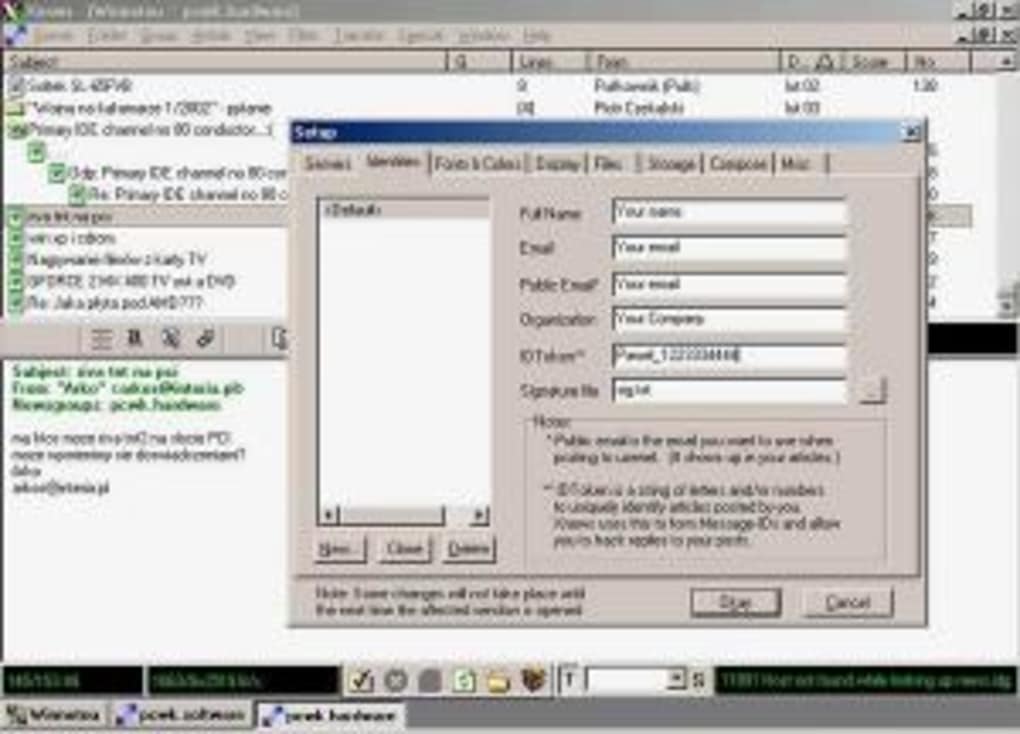
Xnews, as a product of its time, reflects the characteristics of this era. Its simplicity and focus on core functionality were appropriate for the technological landscape of the early 2000s, yet this same simplicity proved to be a limitation in the face of evolving internet technologies. The lack of ongoing development and support ultimately led to its obsolescence.
Comparing Xnews to Modern Alternatives
Today, the need for a dedicated newsreader like Xnews is largely superseded by more integrated solutions. Many modern web browsers offer extensions or add-ons that integrate news feeds (RSS/Atom), providing a more streamlined and modern way to access information updates. While these feeds differ from the full-fledged discussion system that Usenet provided, they serve a similar purpose of delivering timely information.
Moreover, social media and online forums have largely supplanted Usenet’s role as a platform for discussions. These platforms offer significantly improved user interfaces, better moderation, and greater integration with other online services.
Compared to these contemporary options, Xnews stands out as a relic of the past. Its functionality is limited, its interface is outdated, and it lacks the social and collaborative features that are common in today’s online communication tools. While it may hold a nostalgic value for those who used it in the past, it is not a viable alternative for modern internet usage.
Xnews’s Technical Specifications and System Requirements
Xnews, as previously stated, was developed for Windows 95 and earlier operating systems. This highlights the significant technological advancements in the operating system and hardware landscape since its release. Today’s systems are far more powerful, offering vastly superior processing speeds, memory capacity, and graphical capabilities. Running Xnews on modern hardware would be possible through compatibility modes, but the software’s core design would still limit its efficiency and performance compared to modern applications.
The application’s small size (713.50 KB) reflects the limitations of the time; modern applications are generally much larger due to the increased complexity of features and functionalities. The limited system requirements underscore the simplicity of the software but also signify a considerable gap between its capabilities and modern standards.
The fact that it is only available in English further points to its niche audience and its limited appeal in a globalized internet environment. Modern software typically supports multiple languages to accommodate a broader user base.
Conclusion: A Historical Artifact in the Digital Age
Xnews serves as a historical marker, showcasing the evolution of internet technology and online communication. While its functionality was adequate for its time, it has been largely superseded by more modern, feature-rich alternatives. Its continued existence primarily holds historical significance, serving as a reminder of the earlier stages of internet development and the pivotal role Usenet played in shaping online communication. For anyone interested in the history of the internet and Usenet, Xnews might be of some interest; however, its practical use in today’s digital landscape is negligible. Its limitations in functionality, security, and overall user experience make it an unsuitable option compared to modern news aggregators, forums, and social media platforms. The information provided here serves to document and contextualize this legacy application within the broader history of online information access and dissemination.
File Information
- License: “Free”
- Version: “5.08”
- Latest update: “July 28, 2005”
- Platform: “Windows”
- OS: “Windows NT”
- Language: “English”
- Downloads: “30K”
- Size: “713.50 KB”


