
In the pantheon of internet gaming, few titles evoke as much nostalgic affection and simple, addictive pleasure as Yeti Sports. What began as a series of unassuming Flash mini-games quickly blossomed into a global phenomenon, captivating millions with its quirky premise: a formidable yeti seeking catharsis by launching, bouncing, and otherwise interacting with unsuspecting penguins and other Arctic fauna. Far from being a mere fleeting distraction, Yeti Sports cemented its place in the casual gaming landscape, becoming a cult classic that defined an era of browser-based entertainment. This deep dive will explore the origins, diverse gameplay, enduring appeal, and lasting legacy of a game that proved simple mechanics, coupled with a touch of absurdity, could conquer the digital world.
The Legend of the Abominable Snowman’s Revenge
At its heart, Yeti Sports weaves a whimsical, albeit violent, tale of a colossal, frosty Yeti who, after an inexplicable thawing, embarks on a singular mission: revenge. The original description from PhanMemFree framed it succinctly: “Legend of a Yeti Smacking Penguins is a free game. You play the role of a gigantic frozen Yeti and have to defeat the entire army of the smallest creatures in the world. This is a clash of titans.” The narrative, sparse as it was, provided just enough context for the player to immerse themselves in the Yeti’s plight. Here was a creature of immense power, now unleashed, and the only path to satisfaction was through the destruction of its diminutive adversaries.
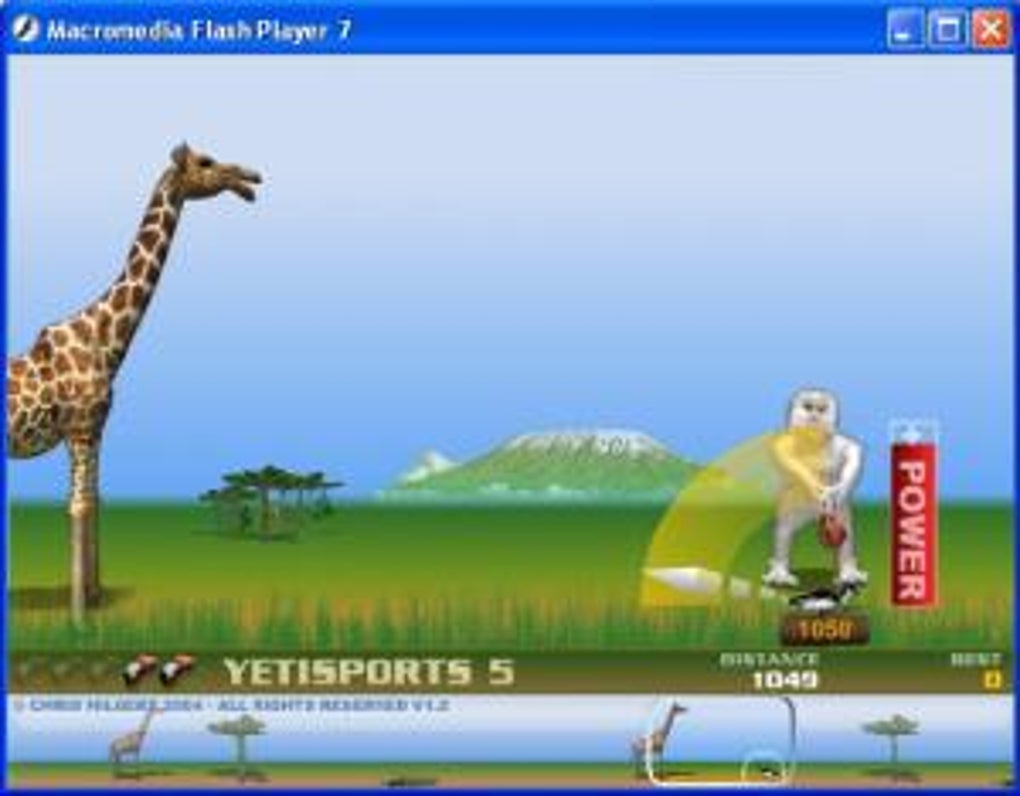
The irony, of course, is that these “smallest creatures” are almost invariably penguins, portrayed as hapless victims rather than an organized army. The “enormous strength, your firepower, and the high quality of your weapons” alluded to in the game’s description were not elaborate arsenals but rather the Yeti’s raw physical prowess and the natural environment around him. The “weapons” were often his club-like arm, a carefully placed albatross, or even the sheer force of his throw. This charmingly absurd premise laid the groundwork for a series of games that were easy to grasp but deceptively challenging to master, built entirely around physics-based interactions and precise timing.
The allure of the Yeti’s quest for vengeance wasn’t in its moral complexity, but in its primal simplicity. It offered players a guilt-free outlet for a little digital mischief, a chance to suspend disbelief and enjoy the spectacle of a powerful creature engaging in increasingly creative forms of “sport” with the avian residents of the polar regions. The stark contrast between the imposing Yeti and the often-comical trajectory of the penguins added to the game’s unique charm, turning each launch into a mini-narrative of triumph or hilarious failure. This fundamental setup—a powerful protagonist, a simple objective, and engaging physics—would be iterated upon across multiple installments, each bringing a fresh twist to the Yeti’s ongoing saga.
A Dive into the Diverse Mini-Games
What many might remember as “Yeti Sports” was, in fact, a collection of distinct mini-games, each offering a unique challenge and expanding the lore of the Yeti’s vengeful escapades. The “Yeti Sports Komplettpaket,” as noted on PhanMemFree, truly represented the “full Yeti pack,” showcasing the breadth of creativity the developers poured into this seemingly simple concept. While all shared the common theme of the Yeti and his penguin subjects, they introduced varied mechanics and objectives, ensuring that the series never grew stale.
The Iconic Penguin Slap (Pingu Throw)
The original, and arguably the most iconic, game in the series was Pingu Throw. This was the inaugural experience for millions, defining what Yeti Sports meant to an entire generation of casual gamers. The objective was straightforward: the Yeti stood on a snowy ledge, club in hand, poised to smack a penguin launched into the air. Players would click once to set the angle of the Yeti’s swing and again to determine its power. The goal was to launch the penguin as far as possible, with distance being the sole metric of success.
The genius of Pingu Throw lay in its elegant simplicity and immediate feedback. There were no complex controls or convoluted rules; just a Yeti, a penguin, and the irresistible urge to achieve maximum distance. The subtle nuances of timing, the arc of the swing, and the subsequent trajectory of the penguin created a surprisingly deep experience. Factors like the penguin’s initial bounce, whether it hit the snow at an optimal angle to slide further, or if it got an unexpected gust of wind (implied, if not explicitly coded) contributed to the thrill of chasing a high score. Each attempt was a learning experience, encouraging players to refine their timing and aim, fostering a competitive spirit born from a desire to outdo their previous best or a friend’s record. This single game alone captured the essence of addictive casual gameplay, perfectly demonstrating how a simple idea, executed well, could lead to immense global popularity.
Albatross Overload (Pingu Bounce)
Building on the success of Pingu Throw, the developers introduced Pingu Bounce, another immensely popular installment that cleverly expanded the gameplay mechanics. Here, the Yeti’s method of launching penguins evolved from a simple smack to a more intricate, collaborative effort with the local wildlife. The goal was still to propel a penguin as high as possible, but this time, the player controlled the Yeti’s ability to throw snowballs at albatrosses flying overhead.
Each hit albatross would plummet, serving as a bouncing platform for the falling penguin. The challenge lay in timing the snowball throws perfectly so that the albatrosses would intersect the penguin’s descent, bouncing it higher and higher. The rhythm of the game was crucial: a missed albatross meant a quick end to the penguin’s ascent, while a well-timed sequence could send it soaring into the digital stratosphere. Pingu Bounce required a different kind of precision and foresight than Pingu Throw, transforming the game from a single impactful action into a continuous series of reactions. The visual feedback of the penguin bouncing off the unfortunate birds, accompanied by satisfying sound effects, added to the game’s engaging nature, making it another favorite for high-score enthusiasts.
Orca Slap (Seal Bounce)
Further diversifying the series, Seal Bounce introduced new environmental elements and challenges. In this iteration, the Yeti stood on an iceberg, and penguins would slide down a ramp towards him. The player’s task was to hit the penguins with a club, aiming to bounce them off a group of waiting orcas in the water below. The orcas, in turn, would propel the penguins further into the air, with the ultimate goal being to hit a target or achieve a certain height.
Seal Bounce brought a different flavor to the Yeti Sports formula. It combined the hitting mechanics of Pingu Throw with the environmental interaction of Pingu Bounce, but with a twist. The orcas were not static targets; their movements often required players to adjust their aim and power, adding a layer of dynamic challenge. This installment demonstrated the developers’ willingness to experiment, incorporating more complex physics and interactive elements while retaining the core, accessible fun that defined the series. The addition of new animal characters and a slightly more complex environment kept the gameplay fresh and engaging, proving that the Yeti’s adventures could transcend the basic act of merely slapping penguins.
Jungle Swing (Penguin Climb)
Not all Yeti Sports games involved launching penguins across vast distances. Penguin Climb, also known as Jungle Swing, took a different approach, transforming the game into a more platformer-like experience. In this installment, the Yeti found himself in a tropical jungle setting, and the objective was to help a penguin climb as high as possible. The Yeti would swing on vines, and players had to time his release to grab onto a higher vine, with the penguin clinging on for dear life.
This particular game stood out for its departure from the established “launch and bounce” mechanics. It tested timing and trajectory in a vertical rather than horizontal plane, challenging players to master the momentum of the swinging Yeti. Penguin Climb demonstrated the versatility of the Yeti Sports concept, proving that its core characters and whimsical tone could be adapted to different gameplay genres while still delivering the same addictive, high-score-driven entertainment. It added a new dimension to the Yeti’s repertoire, showcasing that his sporting endeavors weren’t confined to the icy expanses.
Snowboard Free Ride (Big Wave)
Perhaps the most visually dynamic of the series, Big Wave (or Snowboard Free Ride) saw the Yeti embrace modern extreme sports. This game placed the Yeti on a snowboard, carving down a snowy slope, with penguins serving as obstacles and opportunities for points. The player would control the Yeti’s movement, performing tricks, avoiding hazards, and hitting penguins for bonus points or to trigger certain effects.
Big Wave moved even further away from the original minimalist design, featuring a scrolling background and more intricate controls. It required players to react quickly, navigate a dynamic environment, and combine speed with precision. This installment felt like a significant evolution, pushing the boundaries of what a Flash-based Yeti Sports game could be. It embraced a more contemporary gaming style, showcasing the Yeti’s adaptability and willingness to try his hand at various sporting challenges, thereby broadening the appeal of the series beyond its initial simple premise.
And More…
Beyond these prominent examples, the Yeti Sports collection included other unique iterations like Pingu Throw 2, an enhanced version of the original, and various other experiments that solidified the series’ reputation for innovative, physics-based challenges. Each game, whether it involved throwing, bouncing, climbing, or snowboarding, contributed to the rich tapestry of the Yeti’s sporting exploits. The collective “Yeti Sports Komplettpaket” was a testament to the developers’ consistent output of engaging content, ensuring that players always had a new challenge to master and a fresh high score to chase. This diversity was a key factor in the series’ sustained popularity throughout the Flash gaming era.
The Rise and Enduring Appeal of a Flash Game Phenomenon
The era of Flash games, roughly spanning the late 1990s through the 2000s, was a golden age for casual web-based entertainment, and Yeti Sports emerged as one of its shining stars. These games thrived on accessibility, quick play sessions, and a low barrier to entry. Yeti Sports perfectly embodied these characteristics, making it an ideal candidate for viral spread.
Its success can be attributed to several factors. Firstly, the games were browser-based and free, eliminating the need for downloads (at least initially, before the Windows executables emerged) or installations. This instant gratification was a powerful draw. Anyone with an internet connection could simply navigate to a website and start playing, making it a perfect office distraction or a quick break during study sessions.
Secondly, the simplicity of the controls and objectives meant that anyone, regardless of gaming experience, could pick up and play within seconds. The intuitive mechanics—often just mouse clicks for timing and power—made them immediately engaging. There was no lengthy tutorial, no complex backstory to unravel; just pure, unadulterated gameplay. This universality contributed significantly to its widespread appeal across diverse demographics.
The viral nature of Yeti Sports was undeniable. In an age before pervasive social media, these games spread through word-of-mouth, email forwards, and links shared on forums. Challenging friends to beat high scores became a common pastime, fueling a competitive spirit that kept players coming back. The “one more try” mentality was strong, as players constantly sought to refine their technique and eke out a few extra meters or a higher bounce.
Furthermore, the charm and quirky humor of the characters played a significant role. The stoic, unyielding Yeti, contrasted with the perpetually unfortunate, yet resilient, penguins, created an endearing dynamic. The simple, clean animations and satisfying sound effects added to the overall appeal, making each interaction feel impactful and often amusing. Despite the repetitive nature of some games, the sheer satisfaction of a perfect throw or a record-breaking bounce provided ample reward.
Yeti Sports also managed to achieve a delicate balance between simplicity and depth. While easy to learn, mastering the nuances of timing, trajectory, and physics-based interactions required practice and skill. This depth ensured that the games remained engaging for extended periods, preventing them from becoming mere fleeting fads. It cultivated a dedicated player base that enjoyed the challenge of truly perfecting their technique. As the web evolved, and desktop versions like the “Yeti Sports Komplettpaket” for Windows became available, the phenomenon transcended its Flash origins, allowing players to install and enjoy the full suite of games without needing a browser connection. This adaptability helped solidify its place as a enduring cult favorite, far outliving many of its Flash-era contemporaries.
Technical Specifications and Legacy
The transition from purely browser-based Flash games to downloadable executables marked a significant step for Yeti Sports, allowing it to reach a wider audience and potentially offer more stable performance. According to PhanMemFree, a specific version, “Yeti Sports for Windows Free,” was identified as “Vpart-5” with a “Latest update June 20, 2023.” This particular version indicates an ongoing effort, or at least a recent re-packaging, to keep the game accessible on modern systems, even if its core mechanics hail from an earlier era.
Key technical specifications for this Windows version highlighted on PhanMemFree include:
- License: Free
- Version: part-5 (likely referring to one of the game iterations or a specific compilation)
- Latest update: June 20, 2023 (suggesting recent maintenance or distribution efforts)
- Platform: Windows
- OS: Windows XP (a testament to its origins, yet it often runs fine on newer Windows versions due to its simplicity)
- Language: English
- Downloads: 9.1K (total), 55 (last month’s downloads) – reflecting its niche but enduring appeal.
- Size: 1.93 MB (remarkably small, highlighting its efficiency and simple graphical assets)
- Developer: Yetisports
These specifications underscore the game’s inherent accessibility. Its minute file size (1.93 MB) meant it could be downloaded almost instantly, even on slower internet connections of the past, and required minimal system resources. This low technical barrier was a crucial component of its viral success, making it playable on virtually any Windows PC, from high-end machines to older, less powerful systems. The fact that it was “Free” further bolstered its widespread adoption, adhering to the free-to-play model that many successful casual games of that era leveraged.
The legacy of Yeti Sports extends far beyond its technical footprint. It played a significant role in demonstrating the power of simple, physics-based mechanics in casual gaming. It proved that compelling gameplay didn’t require cutting-edge graphics or complex narratives but could thrive on intuitive controls, engaging challenges, and a touch of memorable charm. The series contributed to the burgeoning culture of high-score chasing and friendly competition, concepts that remain central to many mobile and web games today.
While the original Flash platform has largely faded, Yeti Sports endures through dedicated fan communities, archival efforts, and re-releases like the Windows package. It serves as a nostalgic touchstone for those who remember the early days of internet gaming and a fascinating example of how a game conceived with modest ambitions can achieve cult status and leave an indelible mark on digital entertainment history. Its enduring appeal lies in its timeless simplicity, offering a pure, unadulterated dose of fun that continues to resonate with players seeking a quick, enjoyable diversion.
In conclusion, Yeti Sports is more than just a collection of mini-games; it’s a testament to the power of creative design within technical constraints. From the “Legend of a Yeti Smacking Penguins” to its diverse range of “sports,” it captured the imaginations of millions. Its rise as a Flash game phenomenon highlighted the importance of accessibility and viral spread, while its enduring legacy underscores the lasting impact of well-executed, simple mechanics. Whether you remember the frantic clicks of Pingu Throw or the strategic bounces of Pingu Bounce, Yeti Sports remains a beloved classic, a shining example of how a gigantic frozen Yeti and his penguin adversaries created a small but significant chapter in gaming history, forever available to be revisited through platforms like PhanMemFree.
File Information
- License: “Free”
- Latest update: “August 6, 2025”
- Platform: “Windows”
- OS: “Windows 11”
- Language: “English”
- Downloads: “9.2K”


