
Yik Yak, once a popular anonymous social networking app, is no longer available for download. This article explores the app’s functionality, its rise and fall, and offers some context surrounding its disappearance from app stores. We’ll also look at some alternative apps that offer similar features. The legacy of Yik Yak serves as a cautionary tale in the ever-evolving landscape of social media.
Yik Yak: The App and its Functionality
Yik Yak was a location-based social networking app that allowed users to anonymously post short messages, or “yaks,” visible only to other users within a certain geographical radius. This fostered a sense of local community and allowed users to share thoughts, opinions, and experiences without revealing their identities. The anonymity was a key feature, encouraging open and often unfiltered communication. Users were assigned a unique number for identification within the app, ensuring a layer of privacy while still allowing interaction.
The app’s functionality was relatively simple. Users could create a profile (although personal information beyond a phone number and US address for verification was not required), browse “yaks” posted by others in their vicinity, and post their own messages. Users could also upvote or downvote posts, influencing their visibility and popularity within the feed. The proximity-based nature of the app meant that interactions were largely limited to people within a specific geographic area, usually a college campus or neighborhood. This created a unique microcosm of online interaction, distinct from broader social media platforms.
The app’s reliance on location data also presented challenges. The radius of visibility, while adjustable, often limited interactions to a specific community, making it less appealing to users outside densely populated areas. Furthermore, the app’s anonymity, while a significant draw for some, also contributed to its eventual downfall. The lack of accountability encouraged cyberbullying and the spread of misinformation, issues the app struggled to effectively address.
The Rise and Fall of Yik Yak
Yik Yak’s popularity peaked around 2014 and 2015, especially among college students. Its anonymous nature, combined with its location-based functionality, created a sense of community and a platform for sharing often unfiltered opinions and jokes within a familiar social circle. The app’s rapid growth underscored a demand for an anonymous, location-specific social networking experience. However, this rapid growth was not sustainable.
The app struggled to effectively moderate content, leading to numerous instances of cyberbullying, harassment, and the spread of hateful messages. The anonymity that was a key selling point also became a significant vulnerability. Without a clear mechanism for identifying and holding users accountable for their actions, the platform became a breeding ground for negative interactions, ultimately undermining its appeal and creating a toxic environment for many users.
Furthermore, Yik Yak faced challenges related to its business model. While it was initially free to use, the app struggled to generate revenue and attract substantial investment. The lack of a clear monetization strategy, coupled with the increasing difficulties in managing content moderation, contributed to its eventual decline. In 2017, Yik Yak announced it was shutting down, signaling the end of an era for the once-popular anonymous social networking app.
Yik Yak for Android: App Specs and Download Availability
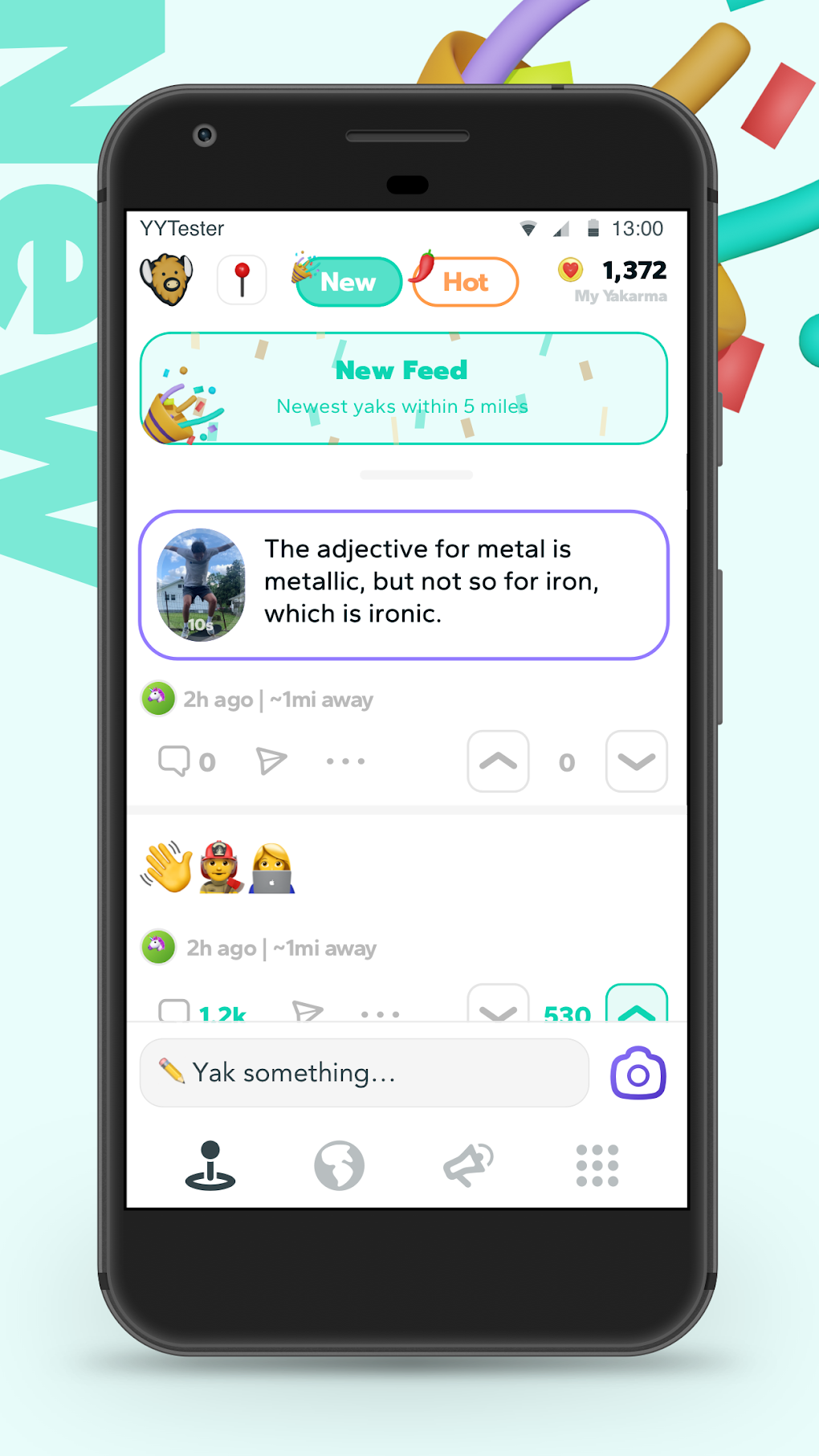
Yik Yak was available for both iOS and Android devices. The Android version, with the file name com.yikyak2_2.1.3.1.apk, had a version number 2.1.3.1 and required Android 9.0 or higher. The app was relatively lightweight, with a size of 32.83 MB. The language supported was English, although the app’s interface was translated into many other languages, facilitating international reach. However, as of this writing, Yik Yak is no longer available for download from any official app stores or direct download links. The download links previously provided are no longer functional. This unavailability is likely due to the app’s discontinuation, and possibly security concerns or other issues relating to the app’s legacy.
Alternatives to Yik Yak
Given Yik Yak’s unavailability, several alternative apps offer similar functionality, albeit with varying degrees of anonymity and content moderation. Some examples include:
-
ZINGR - Find friends, meet: This app focuses on connecting users with others in their vicinity, emphasizing the social aspect similar to Yik Yak’s location-based functionality. However, ZINGR prioritizes user safety and has stricter content moderation guidelines. This stands in contrast to Yik Yak’s more laissez-faire approach to moderation.
-
Hush: Described as an app for exploring casual dating, Hush also offers a platform for discreet communication, similar in spirit to Yik Yak’s anonymous nature. However, the focus is geared more towards dating and relationships, rather than the broader social interactions offered by Yik Yak.
-
Whisper: This app is advertised as a discreet social communication platform. Similar to Yik Yak, it allows users to share their thoughts and feelings anonymously, but with a stronger emphasis on emotional support and self-expression. Whisper also features more robust content moderation compared to Yik Yak’s less effective moderation system.
These alternatives offer a range of features, some mirroring aspects of Yik Yak, while others focus on different user needs and prioritizing user safety and content moderation. However, none of these alternatives perfectly replicate the unique combination of anonymity and location-based interaction that characterized Yik Yak.
Yik Yak’s Legacy and Lessons Learned
The story of Yik Yak offers valuable insights into the challenges of building and maintaining a successful social networking platform. While the app’s initial success highlighted a demand for anonymous, location-based social interaction, its failure underscored the crucial need for effective content moderation and a sustainable business model. The anonymity that initially attracted users also became a major source of problems, making it difficult to address issues like cyberbullying and the spread of harmful content.
Yik Yak’s demise serves as a cautionary tale for developers of social media platforms. The prioritization of anonymity over accountability can have serious consequences, ultimately undermining the platform’s integrity and user experience. The experience of Yik Yak highlights the importance of balancing user freedom with responsibility, and the need for robust moderation tools and clear guidelines to create a safe and positive online environment. Future social media platforms would do well to learn from Yik Yak’s mistakes and adopt more proactive approaches to content moderation and user safety. The success of a social media platform hinges not only on its innovative features but also on its ability to foster a positive and responsible community.
File Information
- License: “Full”
- Version: “2.1.3.1”
- Latest update: “May 27, 2025”
- Platform: “Android”
- OS: “Android 9.0”
- Language: “English”
- Downloads: “1.6K”
- Size: “32.83 MB”
- Download Options: “APK, Google Play”
- Filename: “com.yikyak2_2.1.3.1.apk”


