
YouSendIt, a name that evokes memories of a simpler time in online file sharing, was a significant player in the early days of the internet, offering a relatively straightforward and accessible method for transferring large files. While overshadowed by more modern services, its impact on how users approached digital file transmission is undeniable. This article delves into the history, functionality, and eventual decline of YouSendIt, examining its strengths and weaknesses within the context of its time.
The Genesis of YouSendIt: Addressing the Limitations of Email
Before cloud storage and high-speed internet became commonplace, sending large files posed a significant challenge. Email attachments were often limited in size, FTP (File Transfer Protocol) was complex for casual users, and physical media like CDs and DVDs were cumbersome. YouSendIt emerged as a solution to these limitations, offering a web-based platform for securely sending, receiving, and tracking files of considerable size. Its intuitive interface was a key differentiator, simplifying a process that was previously complicated and often frustrating. Users simply entered recipient email addresses, attached their files, and clicked “send.” The recipient would then receive an email notification containing a download link, allowing them to access the file at their convenience.
This streamlined approach provided a crucial bridge between the limitations of traditional methods and the growing need for convenient, large-scale file sharing. It bypassed the size restrictions of email, eliminated the technical hurdles of FTP, and provided a much more user-friendly alternative to physical media transfer. This simple yet effective design was a cornerstone of its success.

YouSendIt’s Freemium Model and Feature Set
YouSendIt operated on a freemium model, providing a generous free tier alongside paid options for increased capabilities. The free service allowed users to send files up to 100MB in size, while paid accounts offered significantly larger transfer limits, often reaching up to 2GB. The free service also presented limitations on file storage duration, typically keeping files available for download for a week. Paid accounts extended this period, granting users more time for recipients to download the files.
While the 2GB limit imposed by the premium service might seem modest by today’s standards, it was reasonably generous during the era when YouSendIt operated, often exceeding the capacities of other free services. Moreover, the speed of upload and download was a notable factor in its favor, offering users a reasonably efficient transfer experience compared to alternatives prevalent at the time.
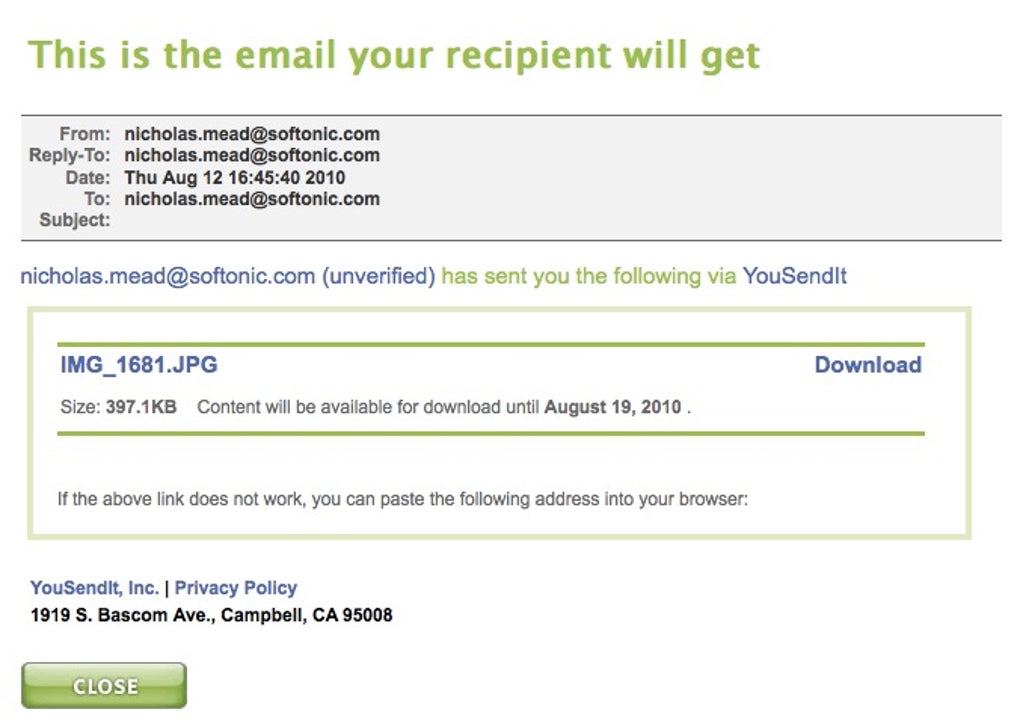
The platform also allowed users to preview the message that recipients would receive, giving them the ability to add a subject line and personalized messages alongside the file. This level of customization, although fairly standard now, was a relatively advanced feature during the early days of online file transfer services.
Security and Privacy Considerations: A Critical Analysis
One notable drawback of YouSendIt, and indeed, any service that relies on uploading files to a third-party server, was the inherent compromise of data security and confidentiality. By entrusting the service with the transfer of their files, users inherently ceded control over the security of their data. Although YouSendIt employed security measures to protect data in transit and at rest, the inherent risks associated with relying on a third-party service always existed. This remains a critical consideration for any cloud-based file-sharing platform, irrespective of the era in which it operates.
This security concern was a significant factor that arguably contributed to YouSendIt’s eventual decline. As user awareness of data privacy and security grew, the inherent risks associated with using such a service became more apparent and weighed more heavily on users’ decision-making process. The rise of more secure and robust alternatives also served to accentuate this concern, making the perceived risks associated with YouSendIt more difficult to justify.
YouSendIt’s Legacy: A Stepping Stone in File Sharing Evolution
Despite its eventual decline, YouSendIt played a crucial role in the evolution of online file sharing. It was among the first to make the process of transferring large files significantly easier and more accessible for the average user. By streamlining a formerly complex process, it significantly lowered the barrier to entry for both personal and professional users, making the exchange of files considerably more efficient. Its intuitive interface and relatively generous free tier allowed many individuals and businesses to easily adapt to the digital age’s increasing reliance on online file transfers.
YouSendIt’s legacy isn’t defined solely by its technical capabilities but also by the timing of its existence. It emerged during a pivotal period in internet technology, a time when the need for simple, effective file-sharing solutions greatly outweighed the concerns about data security that are more prevalent today. It filled a vital gap and established a paradigm that subsequent file-sharing services have built upon.
The Decline and Disappearance of YouSendIt: A Market Shift

The reasons behind YouSendIt’s eventual decline are multifaceted. While it initially offered a competitive advantage through simplicity and ease of use, the market landscape shifted dramatically over time. The rise of cloud storage platforms such as Dropbox, Google Drive, and OneDrive offered significantly more sophisticated functionalities, including greater storage capacity, more robust security features, and better integration with other applications. These services not only offered comparable file-sharing capabilities but also provided a more holistic approach to data management.
Furthermore, the increasing prevalence of high-speed internet connections reduced the urgency of finding a dedicated file-sharing service. Email attachment size limits became less restrictive, and faster upload and download speeds made the perceived efficiency advantages of YouSendIt less compelling. This shift in the technological landscape created intense competition, ultimately leading to YouSendIt’s diminished market share.
The company itself underwent changes, eventually undergoing acquisitions and restructuring. These organizational shifts further contributed to the service’s decline, ultimately leading to its eventual disappearance from the market. The legacy of YouSendIt remains, however, as a reminder of the innovation that drove the evolution of file-sharing technology, highlighting its role as a stepping stone in the continuous advancement of digital file transfer methods.
In conclusion, YouSendIt occupies a significant place in the history of file-sharing services. While it may no longer be operational, its contribution to the development of more user-friendly and efficient methods of online file transfer remains substantial, paving the way for the robust and sophisticated cloud storage solutions that dominate the market today. Its relatively simple approach and user-friendly interface played a critical role in bridging the gap between the limitations of traditional methods and the burgeoning demand for convenient digital file sharing in the early years of the internet. Its shortcomings, particularly regarding security and capacity, highlight the continuous evolution of technological expectations and user demands within the ever-changing landscape of the digital world.
File Information
- License: “Free”
- Latest update: “January 31, 2023”
- Platform: “Web Apps”
- OS: “Chrome”
- Language: “English”
- Downloads: “43.9K”


