
Zapyo was a free proxy service designed to bypass geographical restrictions on internet content. While no longer available for download, its functionality and limitations provide a useful case study in the world of VPN and proxy services. This review examines Zapyo’s features, advantages, disadvantages, and the reasons behind its disappearance from the software landscape.
Zapyo’s Functionality and Ease of Use
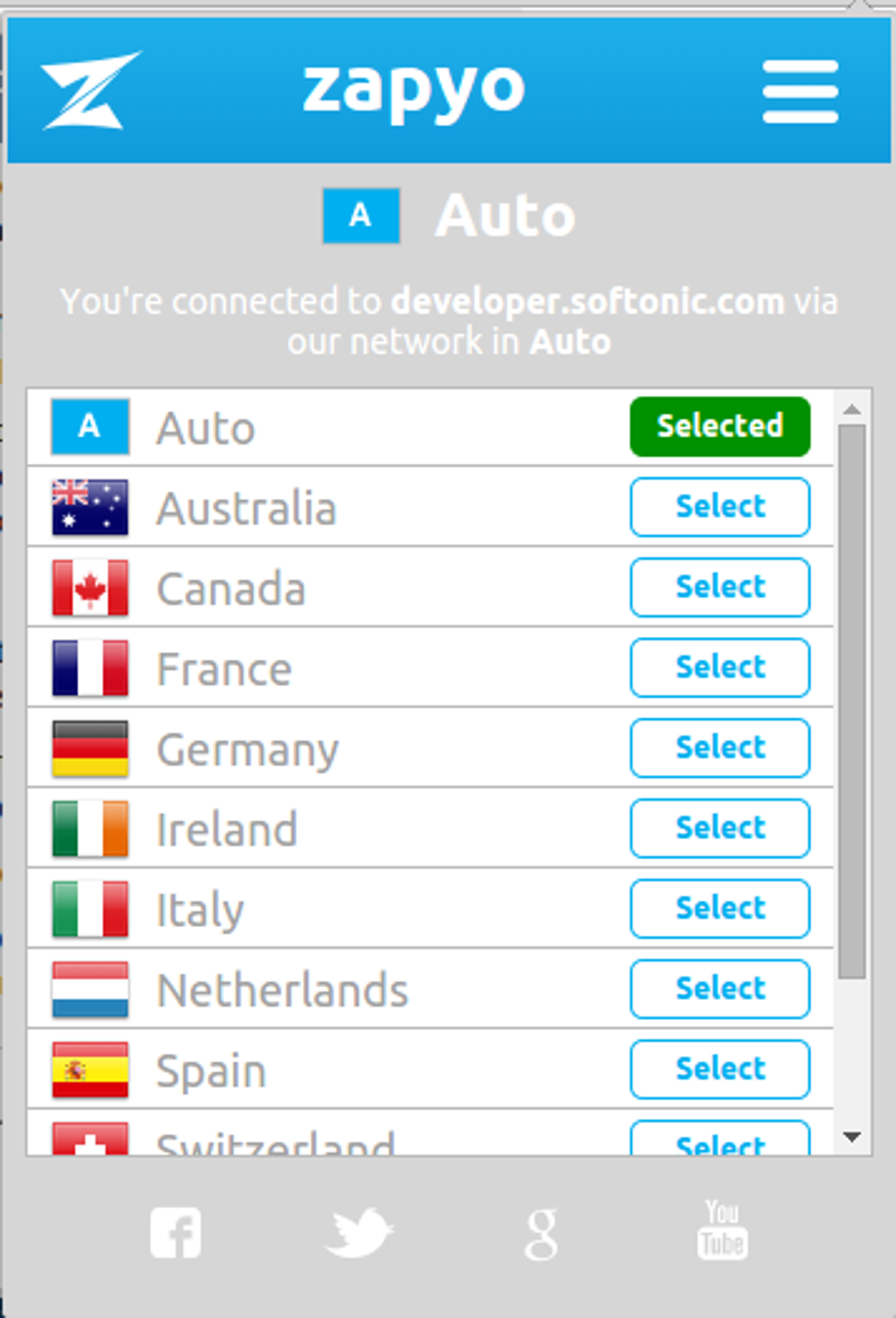
Zapyo presented itself as a simple and straightforward solution for accessing geo-blocked content. Its core functionality revolved around connecting users to proxy servers located in various countries, thereby masking their IP address and allowing them to access websites and services restricted in their region. The user interface was reportedly intuitive, offering a streamlined experience for users unfamiliar with VPN or proxy technology. The software presented users with a list of 11 countries whose servers they could connect to, including popular locations such as Australia, Canada, Spain, the United Kingdom, and the United States. The service offered two connection modes: a “Smart Auto Mode” which automatically attempted to unblock content, and a “Direct Mode” allowing users to manually select a server location and browse the internet as if they were physically present in that country. This dual-mode approach catered to different user preferences and technical skills. Adding Zapyo to a browser required only two clicks, further enhancing its ease of use.
The simplicity of Zapyo was a significant selling point, attracting users seeking a hassle-free method of accessing geo-restricted content. This ease of use, combined with the service’s claimed ability to access blocked videos, social media platforms, and streaming services, likely contributed to its popularity during its operational period. The lack of a required email verification for sign-up also contributed to its user-friendly reputation. Users were only prompted for an email address if they desired one-on-one support.
Advantages and Disadvantages of Zapyo
Zapyo offered several advantages that made it an attractive option for some users:
- Ease of Use: The simple interface and straightforward setup process were major plus points. The two connection modes catered to various user needs, eliminating the complexity often associated with VPN software.
- Free Service: The service was entirely free, eliminating the need for subscriptions or credit card details. While donations were accepted, they were not mandatory for accessing the service.
- IP Address Masking: Zapyo effectively masked the user’s IP address, offering a degree of privacy and anonymity when browsing the internet. This was crucial for bypassing geographical restrictions, but also contributed to a sense of improved online security.
- Access to Geo-Blocked Content: The core functionality – unblocking geo-restricted content – was reliably accomplished, allowing users to access websites and services unavailable in their region. This was the primary draw for many users.
However, Zapyo also suffered from significant limitations:
- Limited Server Locations: The availability of only 11 server locations was a major drawback. The absence of servers in Asia and South America significantly restricted its global reach and utility for a considerable portion of the potential user base. This limitation meant that access to content restricted in certain Asian or South American countries would be impossible using Zapyo.
- No Information on Security Protocols: The absence of detailed information regarding the security protocols and encryption methods employed by Zapyo raised concerns about the security of user data. Without transparency regarding the security measures implemented, users were left to trust the service’s claim of maintaining their privacy.
- Discontinuation of Service: The most significant disadvantage is that the service is no longer available. This leaves users searching for an alternative, as Zapyo’s functionality is no longer accessible. The reasons for its discontinuation remain unclear, but it may indicate potential security vulnerabilities or a failure to meet the demands of its user base.
- Lack of User Reviews: The platform where Zapyo was hosted shows no user reviews, hinting at either a lack of engagement or an attempt to suppress negative experiences with the service.
Comparison with Alternative Solutions
Several alternatives to Zapyo exist, offering a range of features and pricing models. Some are free, while others operate on a subscription basis. These alternatives often provide a more extensive network of servers across a wider geographic area, potentially offering better speeds and connection reliability. Many established VPN providers also offer more robust security features, detailed privacy policies, and better customer support than Zapyo appeared to offer. The discontinued nature of Zapyo makes direct comparison challenging, but it’s clear that alternative options likely provide a superior, more consistent and secure service.
Examples of alternative applications mentioned in the original source include:
- 3uTools: A data management tool, not a VPN.
- Xender: A file-transfer tool, not a VPN.
- Hide My IP: A dedicated IP masking application.
- Zapya: A file transfer tool, not a VPN.
- Your Freedom: An anonymization and anti-censorship solution, providing a broader set of features than Zapyo’s sole focus.
Reasons for Zapyo’s Unavailability
The discontinuation of Zapyo’s service raises several possibilities:
- Security Vulnerabilities: The absence of detailed security information suggests a potential risk of vulnerabilities. The service may have been discontinued due to discovered security flaws that compromised user data or violated privacy regulations.
- Legal Issues: Operating a proxy service that circumvents geographical restrictions can be subject to legal challenges in certain jurisdictions. Zapyo may have faced legal pressure or sanctions forcing its shutdown.
- Financial Unsustainability: Even as a free service, Zapyo likely incurred costs associated with server maintenance and bandwidth. If these costs were not offset by donations or alternative revenue streams, the service may have become financially unsustainable.
- Lack of User Base or Popularity: Insufficient user engagement or adoption could have led to the developers deciding to cease operation. Without a significant user base, the service may have become unsustainable or uninteresting for continued development.
The lack of official communication regarding the shutdown prevents definitive conclusions. However, considering the limited server locations, absent security details, and lack of user reviews, it’s plausible that a combination of these factors led to Zapyo’s eventual disappearance.
Conclusion
Zapyo, while offering a simple and free way to access geo-restricted content, ultimately suffered from significant limitations. Its restricted server locations and lack of detailed security information compromised its appeal. The discontinuation of the service underscores the importance of choosing reliable and well-established VPN or proxy solutions that prioritize security and user privacy. Users seeking to circumvent geographical restrictions should thoroughly research alternative options, considering factors such as server location diversity, security protocols, privacy policies, and user reviews before making a choice. The case of Zapyo serves as a cautionary tale, highlighting the potential risks associated with utilizing less established and transparent services in this domain.
File Information
- License: “Free”
- Version: “0.83”
- Latest update: “September 26, 2018”
- Platform: “Windows”
- OS: “Windows 8”
- Language: “English”
- Downloads: “31K”


