In the ever-evolving landscape of video games, where indie titles often carve out some of the most memorable and impactful experiences, “A House for Alesa Remake” stands as a testament to the power of revisited classics. This free adventure game for PC, developed by the visionary indie creator A. V. Dossow, isn’t just a simple graphical overhaul; it’s a comprehensive reimagining of the first entry in a beloved psychological horror series. It plunges players into the unsettling narrative of a social worker assigned to a disturbing case where child neglect is strongly suspected, a premise that immediately sets a tone of dread and moral ambiguity. For fans of the original and newcomers alike, this remake promises an enhanced, more immersive, and ultimately definitive way to experience the chilling tale that first captivated audiences.
The original “A House for Alesa” earned its reputation by skillfully weaving psychological tension with a deeply disturbing narrative, relying on atmosphere and subtle scares rather than cheap jump scares. This remake endeavors to elevate that experience, bringing modern visual fidelity and expanded content to a story that remains as poignant and unsettling as ever. It’s a crucial release for anyone who appreciates the unique narrative depth and emotional resonance that only psychological horror can deliver, especially when crafted with the care and vision inherent in independent game development.
The Enduring Appeal of Indie Games
The gaming industry has witnessed a profound shift over the past two decades, with independent game development rising from a niche interest to a formidable force, often pushing boundaries that larger studios, constrained by commercial expectations, might shy away from. Indie games are celebrated for their innovation, artistic integrity, and willingness to explore complex themes and unconventional mechanics. They frequently become cultural touchstones, not necessarily through massive marketing budgets, but through word-of-mouth fueled by genuine passion and unique vision.
Psychological horror, a subgenre particularly favored by indie developers, thrives on this freedom. Unlike traditional horror, which often relies on overt threats and visceral shocks, psychological horror delves into the human mind, exploiting fears related to vulnerability, isolation, mental instability, and existential dread. It’s about what you don’t see, what you might imagine, and the creeping realization that the true monsters often reside within. Games in this genre excel at creating pervasive atmospheres of unease, using environmental storytelling, unreliable narration, and subtle audio cues to build tension. The fear is often internal, derived from the player’s own interpretations and anxieties, making for a deeply personal and often profoundly disturbing experience.
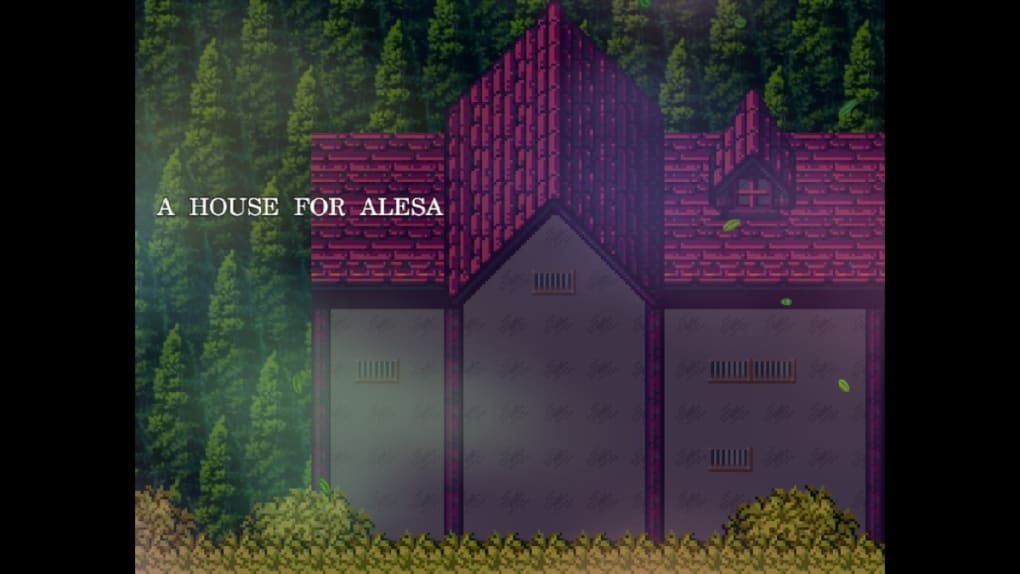
“A House for Alesa” first emerged within this fertile ground, quickly gaining recognition for its harrowing depiction of a deeply troubled household. Without relying on elaborate graphics or grand action sequences, the original game communicated a powerful sense of claustrophobia and despair. Its strength lay in its narrative economy and its ability to suggest horrors rather than explicitly show them, leaving much to the player’s imagination—a hallmark of effective psychological horror. The story of a social worker investigating potential child neglect is inherently grim, touching upon real-world anxieties and social failings. It challenged players to confront difficult ethical dilemmas and navigate a narrative steeped in ambiguity, making its impact all the more profound. It resonated with players who sought more than just adrenaline rushes, but rather a cerebral and emotionally taxing journey. The remake, therefore, isn’t just updating a game; it’s preserving and enhancing a significant piece of indie horror history, ensuring its themes and scares remain relevant and potent for a new generation of players.
Unpacking the Adventure and Narrative Depth
At its core, “A House for Alesa Remake” retains the chilling premise that defined its predecessor: a social worker steps into a home where the shadows of neglect loom large. This initial setup is brilliant in its simplicity, immediately grounding the horror in a relatable, albeit deeply uncomfortable, scenario. The player isn’t fighting supernatural monsters in a fantastical realm; they are investigating a very human tragedy, which often proves to be far more terrifying. The game deftly explores themes of responsibility, systemic failure, and the fragility of innocence, forcing players to grapple with uncomfortable truths and the potential for deep-seated evil within seemingly ordinary environments.
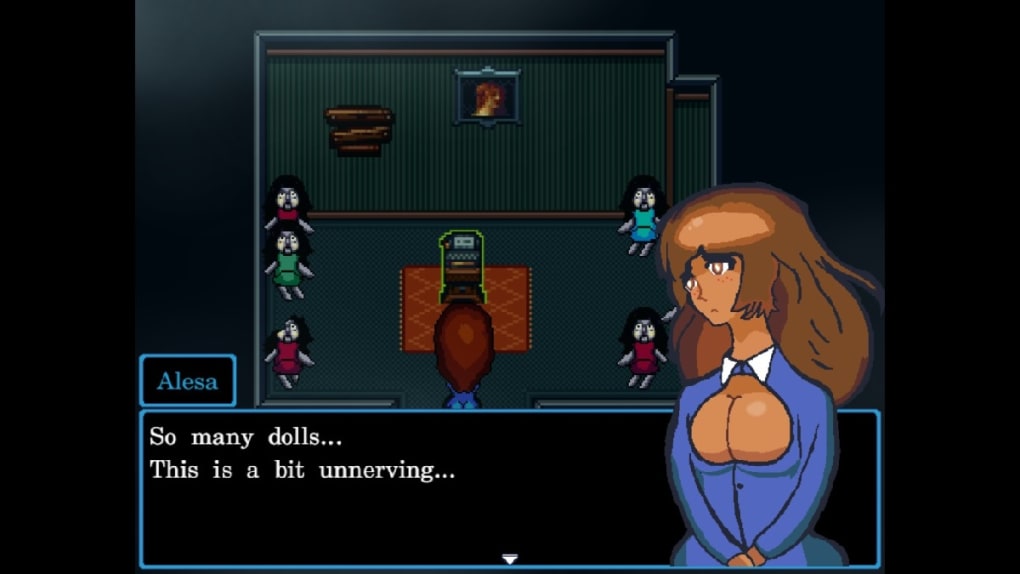
The brilliance of this remake truly shines through in how it builds upon the original’s narrative strengths. While the core story remains intact, it has been enriched with significant improvements and new content that deepen the player’s engagement and understanding. The most immediately noticeable enhancement is the comprehensive visual overhaul. The remake boasts enhanced graphics that bring the unsettling environments to life with greater detail and atmospheric fidelity. Character designs have been refined, offering more expressive and nuanced portrayals of the few inhabitants of this desolate house, allowing for a stronger emotional connection (or repulsion) to their plights. Smoother animations contribute to a more fluid and believable interaction with the game world, further immersing the player in its oppressive atmosphere. These visual upgrades are not merely cosmetic; they serve to amplify the psychological tension, making the eerie silence, the flickering lights, and the subtle shifts in character expressions all the more impactful.
Beyond the aesthetics, the narrative itself has been expanded. Players will discover new cutscenes that provide additional context, reveal hidden facets of the story, or deepen the mystery surrounding Alesa and her family. Entirely new areas have been added to explore, expanding the house beyond its original confines and introducing fresh opportunities for discovery and dread. These new environments are seamlessly integrated, feeling like natural extensions of the already established world, rather than tacked-on additions. Complementing these new areas are a host of new puzzles to solve, designed to challenge the player’s intellect while simultaneously advancing the narrative. These puzzles often incorporate elements of environmental storytelling, requiring careful observation and critical thinking to unravel the house’s dark secrets.
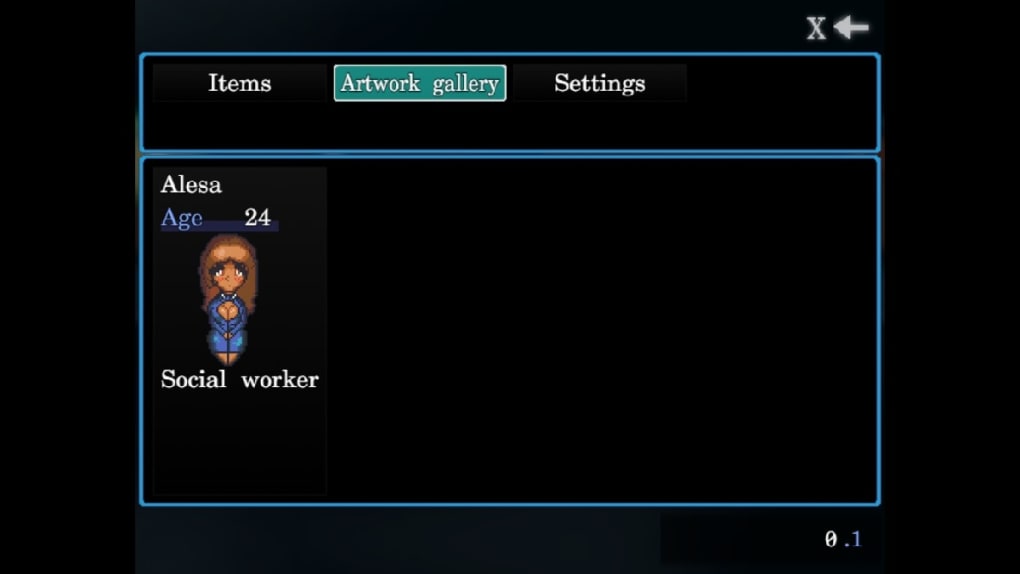
Furthermore, “A House for Alesa Remake” introduces several features that significantly enhance replayability and overall player experience. An “Art Gallery” feature allows players to delve deeper into the game’s conceptualization and artistic direction, offering a behind-the-scenes look that enriches appreciation for the developer’s craft. For the completionists and lore enthusiasts, a collectible card collection provides additional incentives to explore every nook and cranny of the house, uncovering fragments of information that flesh out the backstory and characters.
Perhaps the most compelling addition, and a clear highlight for both new and returning fans, is the expansion of possible endings. The original game’s conclusion, while impactful, left some longing for more narrative branches. This remake delivers spectacularly, now offering a total of eight possible outcomes to the story. This dramatically increases the game’s replay value, as players will be compelled to explore different choices and actions to uncover all possible resolutions. Given that a single playthrough of the game remains intentionally on the shorter side – a common characteristic of psychological horror designed to maintain intense tension – these multiple endings transform the experience from a brief encounter into a rich tapestry of choices and consequences. It ensures that “A House for Alesa Remake” isn’t just a fleeting horror experience but a narrative sandbox where every decision truly matters, making each subsequent playthrough feel fresh and meaningful. It truly serves as the best, most comprehensive way to experience the original story in all its terrifying glory.
Enhancing Your Gaming Experience with Utilities & Tools
While “A House for Alesa Remake” is a free game, offering accessible psychological horror to a broad audience, the quality of your gaming experience can still be significantly influenced by how well your PC is maintained and optimized. Even indie titles, while generally less demanding than AAA blockbusters, benefit from a stable and efficient system. This is where a category like “Utilities & Tools” becomes invaluable, extending beyond mere game functionality to encompass the entire ecosystem that supports your digital life, including gaming.
For instance, ensuring your graphics drivers are up-to-date is fundamental. Outdated drivers can lead to performance issues, graphical glitches, or even prevent games from launching. Utilities designed for driver management, often bundled with graphics card software, play a crucial role here. Similarly, system cleaners can periodically remove temporary files, broken registries, and other digital clutter that accumulates over time, freeing up disk space and potentially improving overall system responsiveness. While “A House for Alesa Remake” has a modest size (131.25 MB, as per specs), a cluttered system can still impact its smooth operation.
Performance monitors, another type of utility, can provide real-time insights into your CPU, GPU, and RAM usage. While playing “A House for Alesa Remake,” you might use these to understand if your system is struggling, even subtly, with certain effects or scene transitions. This diagnostic capability allows you to identify bottlenecks and take corrective action, whether it’s closing background applications or adjusting in-game settings. For a game like “A House for Alesa Remake,” which relies heavily on atmosphere and immersion, any stutter or lag can severely break the psychological tension A. V. Dossow worked so hard to build.
Furthermore, the game is available for Windows, specifically Windows 10, as listed in its specifications. Maintaining a healthy operating system is paramount. Windows utilities, such as Disk Defragmenter (for traditional HDDs), Error Checking tools, and general system optimizers, contribute to a stable foundation for all your software, including games. Even a well-optimized Windows system can sometimes benefit from third-party tools that offer more granular control over processes or startup items, ensuring that only essential services are running when you’re immersed in Alesa’s unsettling world.
Even seemingly unrelated tools, like robust file managers, can indirectly enhance your gaming experience. They make it easier to locate game files, manage screenshots, or even back up save data. While “A House for Alesa Remake” is not a graphically intensive game that pushes hardware to its limits, the principle remains: a well-maintained PC, supported by a thoughtful selection of utilities and tools, ensures that every game, from indie horror to expansive RPGs, runs as smoothly and immersively as possible, allowing you to focus solely on the narrative and dread.
Prioritizing Security & Privacy for Downloads
The appeal of a free game like “A House for Alesa Remake” is undeniable, offering a high-quality experience without any financial barrier. However, the world of free software, while rich with opportunity, also carries inherent risks regarding “Security & Privacy.” When downloading any application, especially from the internet, exercising caution and employing best practices is absolutely critical. This is where trusted platforms and user vigilance converge to create a safe digital environment.
First and foremost, it’s essential to download software from reputable sources. Platforms like PhanMemFree.org strive to vet applications, providing users with a “Security Status” (as noted in the game’s specs) that indicates the trustworthiness of a download. This status is a crucial indicator, often based on virus scans and checks for malicious bundled software. For “A House for Alesa Remake,” the fact that it’s listed with a positive security status on a platform like PhanMemFree.org offers a significant level of reassurance.
However, users should always maintain their own layers of defense. A robust antivirus program is non-negotiable for any PC user. An effective antivirus will scan downloads, monitor real-time activity for suspicious behavior, and quarantine or remove detected threats. Pairing this with a firewall, which controls incoming and outgoing network traffic, adds another critical barrier against unauthorized access or data breaches. These tools work in concert to protect your system from malware, ransomware, spyware, and other forms of cyber threats that can be inadvertently downloaded with seemingly harmless software.
Furthermore, users should always be wary of “bundled software.” Some free downloads, especially from less reputable sites, might attempt to install additional, unwanted programs – often adware or potentially unwanted programs (PUPs) – alongside the main application. It’s vital to read through installation prompts carefully, opting for custom installations if available, to deselect any additional software you don’t recognize or explicitly want. In the context of a game like “A House for Alesa Remake” being offered freely, vigilance against such practices ensures that your system remains clean and your privacy uncompromised.
Password management is another facet of security that, while not directly related to game downloads, forms part of a holistic approach to digital safety. Using strong, unique passwords for all your online accounts, stored securely with a reliable password manager, minimizes the risk of credentials being compromised if one service is breached. Finally, for those concerned about online anonymity or accessing geo-restricted content, a VPN (Virtual Private Network) offers an additional layer of privacy by encrypting your internet traffic and masking your IP address. While not strictly necessary for downloading “A House for Alesa Remake,” it exemplifies the range of tools available under the “Security & Privacy” umbrella to protect your digital footprint. By prioritizing these measures, players can enjoy free games like “A House for Alesa Remake” with peace of mind, confident that their system and personal data are safeguarded.
Why This Remake Ranks Among the Best Products
“A House for Alesa Remake” isn’t merely a nostalgic re-release; it’s a meticulously crafted update that firmly positions itself as one of the “Best Products” within the indie horror genre, and indeed, within the broader landscape of free-to-play PC games. The developer, A. V. Dossow, has demonstrated a profound understanding of what made the original special and how to enhance it without sacrificing its core identity.
The game’s primary strengths lie in its comprehensive visual overhaul and the depth it adds to an already compelling narrative. The enhanced graphics, refined character designs, and smoother animations breathe new life into the chilling household, making the psychological tension more palpable and the unsettling atmosphere more pervasive. This isn’t just about making the game “look pretty”; it’s about making it more immersive, more terrifying, and more effective at conveying its disturbing themes. The subtle nuances in the environment and character expressions now carry greater weight, drawing the player deeper into the social worker’s harrowing investigation.
Crucially, the remake doesn’t just rest on its visual laurels. The narrative enhancements, including new cutscenes, expanded areas, and more intricate puzzles, genuinely enrich the story. These additions feel organic, extending the mystery and providing a more complete picture of the tragic circumstances surrounding Alesa. The “Art Gallery” and collectible card collection further encourage exploration and add layers of lore, rewarding players who delve deeper into the game’s world.
However, the standout feature that elevates this remake to “definitive experience” status is the expansion to eight possible endings. This bold decision transforms the game from a single, impactful playthrough into a rich, branching narrative journey. While the gameplay itself might be considered “short” by some, the sheer variety of outcomes dramatically boosts replayability. In psychological horror, a shorter, intense experience can often be more effective than a drawn-out one, as it prevents fatigue and maintains a high level of tension throughout. With eight endings, each playthrough becomes a quest to uncover new facets of the story, new consequences for different choices, and a deeper understanding of the complex characters involved. This strategic design choice mitigates the “short gameplay” con, turning it into a strength that encourages multiple, focused engagements with the narrative.
For newcomers, “A House for Alesa Remake” offers the ideal entry point into this celebrated series. They get to experience the original story in its most polished and complete form, benefitting from all the enhancements from day one. For returning fans, it’s a joyous return, a chance to rediscover a beloved classic with fresh eyes and a wealth of new content to explore. The promise of new endings alone is enough to entice veterans back into Alesa’s house.
The fact that this experience is offered for free, available in English on Windows platforms, makes it incredibly accessible. This accessibility, combined with its high quality and significant improvements, makes “A House for Alesa Remake” an easy recommendation and a shining example of how to successfully remake an indie classic. It’s a compelling, atmospheric, and emotionally resonant horror adventure that delivers on all fronts, cementing its place among the best free-to-play titles available today. If you’re seeking a profound and unsettling journey into the depths of human darkness, this remake is an essential download from PhanMemFree.org.
File Information
- License: “Free”
- Version: “varies-with-device”
- Latest update: “March 18, 2024”
- Platform: “Windows”
- OS: “Windows 10”
- Language: “English”
- Downloads: “64”
- Size: “131.25 MB”