
Calculators have become indispensable tools in our modern world, seamlessly integrating into our daily lives, from balancing household budgets to complex scientific computations. This comprehensive guide explores the evolution, functionalities, and diverse applications of calculators, delving into their various types and the impact they’ve had on education, science, and technology.
The Evolution of the Calculator: From Abacus to Algorithm
The concept of calculation predates the invention of the electronic calculator by millennia. Early civilizations relied on rudimentary tools like the abacus, a manual calculating device using beads to represent numbers. The abacus, originating in Mesopotamia around 2700 BC, allowed for basic arithmetic operations and remained a primary calculation tool for centuries. Its enduring legacy lies in its simplicity and effectiveness in fostering a fundamental understanding of numerical manipulation.
Over time, mechanical calculators emerged, utilizing gears and levers to perform calculations. Blaise Pascal’s Pascaline, invented in 1642, is considered a pioneering mechanical calculator. It could perform addition and subtraction, representing a significant advancement over the abacus. Later innovations, such as the Stepped Reckoner by Gottfried Wilhelm Leibniz in 1673, expanded capabilities to include multiplication and division. These mechanical devices, while cumbersome and limited in speed, laid the groundwork for more sophisticated calculating machines.
The 20th century witnessed the advent of electromechanical calculators, which incorporated electric motors to automate the calculation process. These machines offered increased speed and accuracy compared to their purely mechanical predecessors. However, they were still relatively large, expensive, and not widely accessible.
The true revolution in calculation came with the development of electronic calculators in the latter half of the 20th century. The invention of the integrated circuit (IC) drastically reduced the size and cost of electronic components, paving the way for the compact, affordable calculators we see today. The first handheld electronic calculator, the Busicom 141PF, emerged in 1970, marking a turning point in the accessibility and usability of this crucial technology.
Types of Calculators: Tailored to Specific Needs
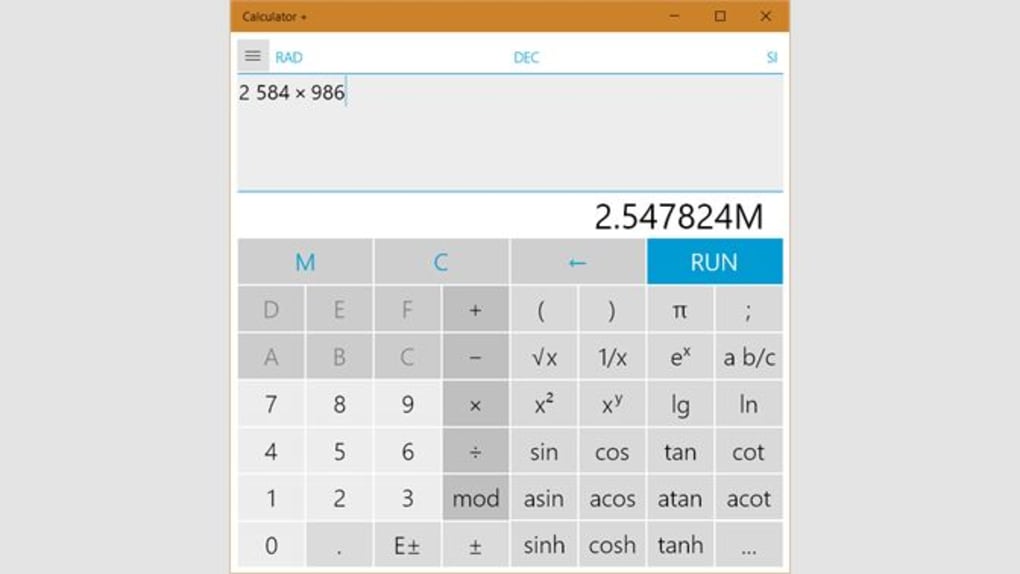
Calculators are no longer a monolithic entity; they cater to diverse needs and skill levels. The sheer variety reflects the broad applications of calculation across various fields.
Basic Calculators: These are the simplest type, primarily designed for basic arithmetic operations—addition, subtraction, multiplication, and division. They are compact, inexpensive, and ideal for everyday tasks like balancing a checkbook or calculating tips.
Scientific Calculators: A significant step up from basic calculators, scientific calculators incorporate advanced functions necessary for scientific and engineering applications. These functions often include trigonometric functions (sine, cosine, tangent), logarithmic functions, exponential functions, and statistical functions. Scientific calculators frequently feature a more extensive display, allowing for the input and output of complex equations and results. They often offer programmable memory for storing equations and constants.
Graphing Calculators: Building upon the capabilities of scientific calculators, graphing calculators can display graphs of functions, enabling a visual representation of mathematical relationships. These are essential tools for students studying algebra, calculus, and other mathematically intensive subjects. Advanced graphing calculators may offer features such as numerical equation solving, calculus operations (derivatives and integrals), and matrix operations. Their sophisticated capabilities make them invaluable tools for visualizing data and understanding mathematical concepts.
Financial Calculators: Specialized for financial calculations, these calculators are designed for handling interest rates, present values, future values, and other financial metrics. They are widely used by financial professionals, investors, and individuals managing personal finances. They streamline the computation of loan payments, investment returns, and other financial planning tasks.
Programmable Calculators: Offering the highest level of functionality, programmable calculators allow users to input and execute their own programs. This level of customization enables the development of sophisticated calculation routines for specific applications. Programmable calculators are often used in engineering, research, and other specialized fields where repetitive calculations are involved.
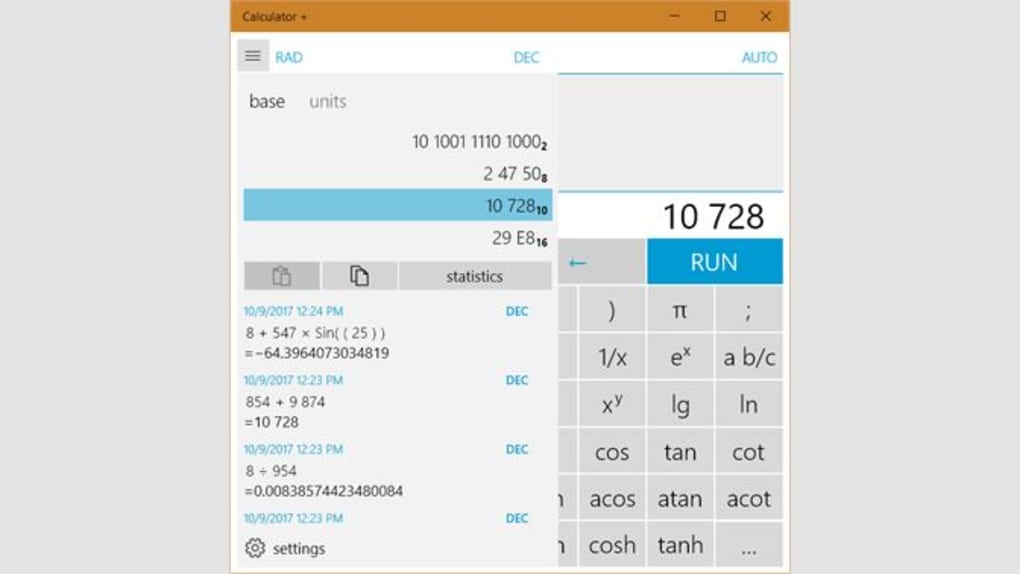
Applications of Calculators Across Diverse Fields
The impact of calculators extends far beyond simple arithmetic. They have revolutionized numerous fields, significantly increasing efficiency and accuracy in various tasks.
Education: Calculators have become an integral part of the educational landscape, assisting students at all levels. They aid in performing complex calculations swiftly, allowing students to focus on understanding concepts rather than getting bogged down in tedious computations. However, the use of calculators in education remains a subject of debate, with some advocating for a balance between calculator use and developing fundamental mathematical skills.
Science and Engineering: In the realms of science and engineering, calculators are indispensable tools. They facilitate complex calculations in physics, chemistry, engineering, and other scientific disciplines. From calculating trajectories in aerospace engineering to analyzing data in scientific research, calculators ensure precise and efficient computations, leading to more accurate results and faster progress.
Finance and Business: The financial world heavily relies on calculators for a multitude of tasks. From calculating interest rates and loan payments to analyzing investments and forecasting financial trends, calculators play a critical role in financial modeling and decision-making. Their accuracy and speed contribute significantly to efficient financial management.
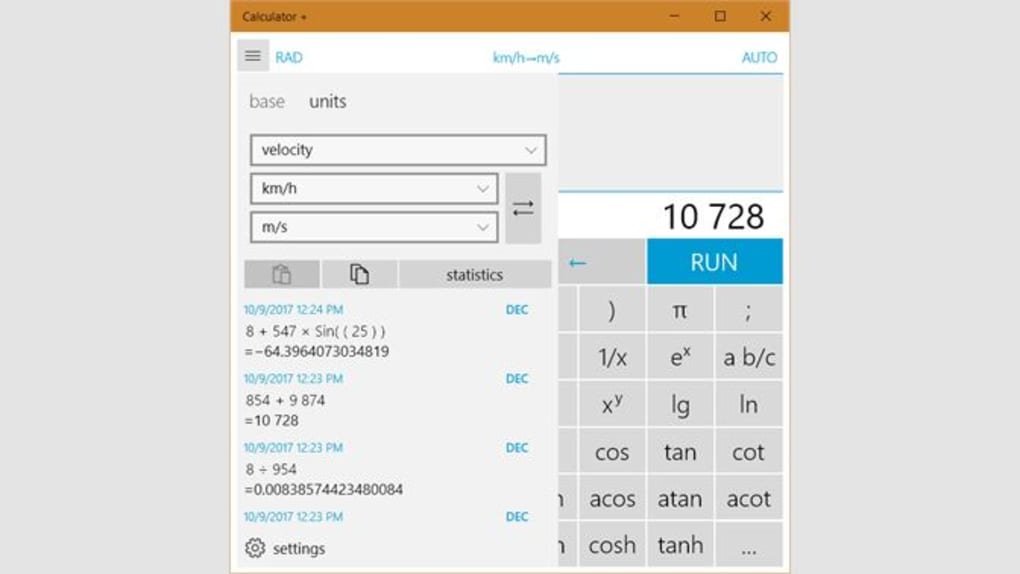
Everyday Life: Beyond specialized fields, calculators are deeply embedded in everyday life. Household budgeting, shopping calculations, and even cooking recipes often involve the use of calculators. They make calculations simpler and more accessible, saving time and reducing the risk of errors.
The Future of Calculators: Integration and Innovation
The future of calculators is likely to involve increased integration with other technologies. We can expect to see greater connectivity, allowing calculators to access data and perform calculations in real-time. Artificial intelligence (AI) could also play a significant role, potentially enabling calculators to learn user preferences and offer tailored assistance.
Furthermore, the line between calculators and other devices is blurring. Smartphones and tablets already incorporate calculator apps, providing convenient access to calculation capabilities. The development of more sophisticated calculator apps with advanced functionalities could lead to a further convergence between calculators and other digital tools.
Calculator Software and Accessibility
While physical calculators remain relevant, software-based calculators offer significant advantages. They are readily available on various platforms, eliminating the need to carry a physical device. Software calculators often boast advanced functionalities not found in their physical counterparts, offering greater flexibility and customizability. Many free or inexpensive calculator applications are available, making them accessible to a wider audience. Furthermore, software calculators frequently integrate seamlessly with other software, facilitating data transfer and efficient workflow.
The ease of access to calculator software, coupled with their advanced features, has contributed to the expanding accessibility of calculation capabilities. This wider access empowers individuals in numerous fields and strengthens the overall availability of crucial computational resources.
In conclusion, calculators have come a long way from their humble beginnings. Their evolution reflects humanity’s persistent drive to improve efficiency and accuracy in numerical calculations. As technology continues to advance, calculators will undoubtedly adapt and integrate into the fabric of our technological landscape, continuing to play a pivotal role in various aspects of our lives, from education and science to everyday tasks.
File Information
- License: “Free”
- Version: “4.1.7968.0”
- Latest update: “July 15, 2022”
- Platform: “Windows”
- OS: “Windows 11”
- Language: “English”
- Downloads: “36.2K”


