
The .NET Framework, a cornerstone of the Windows operating system, underpins countless applications. This article delves into version 3.0, exploring its features, significance, and legacy within the broader .NET ecosystem. While newer versions have superseded it, understanding .NET Framework 3.0 provides valuable context for comprehending the evolution of this crucial software development platform.
Key Features and Enhancements of .NET Framework 3.0
.NET Framework 3.0, released in November 2006, wasn’t a radical overhaul like some of its predecessors. Instead, it built upon the existing .NET 2.0 foundation, focusing on enhancing capabilities and introducing new technologies crucial for building next-generation applications. Its core strength lay in the inclusion of Windows Presentation Foundation (WPF) and Windows Communication Foundation (WCF), two significant additions that redefined how developers approached user interfaces and distributed applications.
Windows Presentation Foundation (WPF): A Paradigm Shift in User Interface Design
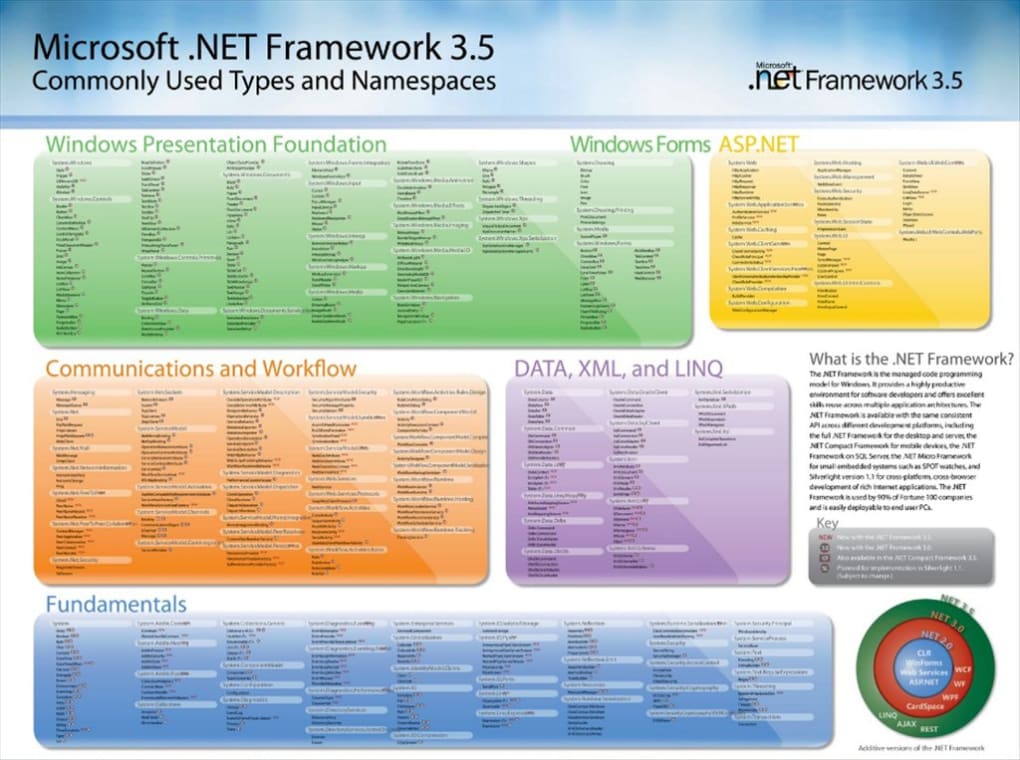
WPF marked a substantial departure from the traditional Windows Forms approach to user interface development. It leverages the power of DirectX to render graphical elements, enabling richer, more visually appealing interfaces than ever before. WPF’s key advantages include:
-
Vector-based graphics: Unlike raster graphics, vector-based graphics in WPF scale seamlessly without loss of quality, making them ideal for applications requiring high-resolution displays or dynamic resizing. This eliminates the need for multiple image assets at different resolutions.
-
Data binding: WPF simplifies data presentation by directly binding user interface elements to data sources. Changes in the data automatically reflect in the UI, and vice-versa, reducing the amount of code required for UI updates.
-
XAML (Extensible Application Markup Language): XAML provides a declarative way to define the UI, separating presentation logic from application code. This promotes cleaner, more maintainable codebases. Developers can create visually rich user interfaces using a markup language, making the development process more intuitive and collaborative.
-
Animations and effects: WPF integrated rich animation and visual effects capabilities, allowing developers to create highly interactive and engaging user experiences. These effects could be easily implemented and customized to enhance the visual appeal of applications.
Windows Communication Foundation (WCF): Modernizing Distributed Application Development
WCF revolutionized how developers built distributed applications. It provided a unified programming model for creating services that communicate over various protocols, including HTTP, TCP, and MSMQ. Key improvements offered by WCF include:
-
Interoperability: WCF enabled seamless communication between applications built using different technologies, languages, and platforms. This opened up possibilities for broader integration within enterprise systems.
-
Simplified Service Creation: WCF simplified the process of creating and deploying services, hiding much of the underlying networking complexities. Developers could focus on business logic instead of intricate networking details.
-
Security: WCF provided robust security features, such as authentication, authorization, and message encryption, to protect sensitive data transmitted between services.
-
Reliable Messaging: WCF supported reliable messaging patterns, ensuring that messages were delivered successfully even in the face of network failures. This was particularly crucial for applications requiring high reliability.
-
Multiple Binding Options: Developers could choose from a variety of communication protocols and bindings, allowing them to optimize their service implementations for specific performance or security requirements.
Other Notable Enhancements in .NET Framework 3.0
Beyond WPF and WCF, .NET Framework 3.0 included several other noteworthy enhancements:
- Windows Workflow Foundation (WF): WF provided a framework for designing and executing workflows, automating business processes within applications.
- Windows CardSpace: This technology aimed to simplify user identity management and secure online interactions. While not as widely adopted as initially hoped, it represented an early exploration of identity management in the digital space.
These improvements, alongside bug fixes and performance optimizations present in the underlying .NET libraries, made .NET Framework 3.0 a significant release that paved the way for many future advancements in the .NET ecosystem.
System Requirements and Compatibility
.NET Framework 3.0 had specific system requirements that needed to be met for successful installation and operation. These requirements varied slightly depending on the operating system but generally included:
-
Operating System: Windows Vista, Windows Server 2003, or Windows XP SP2 (with certain updates). Older Windows versions wouldn’t be compatible.
-
Processor: A minimum processor speed was usually specified, although reasonably modern processors easily satisfied these requirements.
-
RAM: A minimum amount of RAM was necessary; more RAM would generally enhance performance, especially for complex applications.
-
Hard Disk Space: Installation required a specific amount of free disk space to accommodate the framework files and related components.
Compatibility with previous .NET versions varied depending on the specific application. Applications targeting .NET 3.0 generally required .NET 3.0, or in many cases, .NET 3.5 (which includes 3.0 functionality). However, some applications may have required explicit installations of particular elements within .NET 3.0.
.NET Framework 3.0’s Impact and Legacy
Although surpassed by subsequent versions, .NET Framework 3.0 holds a significant place in the history of the .NET platform. Its introduction of WPF and WCF fundamentally altered how developers approached UI design and distributed application architecture. WPF’s declarative approach to UI development, coupled with its rich graphics capabilities, allowed developers to create far more visually appealing applications. WCF’s unified programming model simplified the creation of interoperable services, fostering easier communication between diverse systems.
The success of these components solidified their place in the development landscape. While subsequent versions of .NET built upon and enhanced the core functionality of WPF and WCF, the fundamental concepts and architectural principles remain relevant and influential in modern development practices. .NET Framework 3.0 served as a bridge, leading to the more modern and versatile .NET platforms we see today. Many of the concepts and features introduced in .NET 3.0 continue to resonate in modern .NET development.
Comparison with Later Versions
Later versions of the .NET Framework, including .NET 3.5, 4.0, and beyond, incorporated many significant improvements upon the foundations established in version 3.0. These improvements range from performance enhancements and bug fixes to entirely new features and programming paradigms. For instance, .NET 4.0 introduced features like Task Parallel Library (TPL) to facilitate parallel programming, while later versions saw significant improvements in language features, such as LINQ (Language Integrated Query) and async/await.
However, the core components introduced in .NET 3.0 – WPF and WCF – continued to evolve and remain integral parts of these later releases. These technologies were refined, optimized, and enhanced, but their fundamental roles in .NET’s capabilities persisted.
.NET Framework 3.0’s significance lies not just in its individual features, but in its role as a stepping stone in the platform’s evolution. It laid the groundwork for many of the core concepts and features that continue to shape .NET development today. While it’s no longer actively supported, understanding its impact remains crucial for appreciating the complete history and architectural progression of the .NET ecosystem. Understanding .NET 3.0’s innovations helps to contextualize the advancements and refinements seen in subsequent .NET versions.
File Information
- License: “Free”
- Version: “3.5-SP1”
- Latest update: “April 24, 2019”
- Platform: “Windows”
- OS: “Windows 7”
- Language: “English”
- Downloads: “27.6K”
- Size: “2.96 MB”


