
The Microsoft .NET Framework 3.0 represents a significant milestone in the evolution of Windows application development. Released as an extension to the .NET Framework 2.0, it introduced several groundbreaking technologies that fundamentally altered how developers created applications for the Windows operating system. This framework wasn’t a standalone application itself; rather, it served as a crucial runtime environment, providing the necessary components for executing programs built using the .NET development platform. Its impact extended far beyond simply running applications; it laid the groundwork for a new generation of visually rich, communicatively robust, and process-driven software solutions.
The Core Components of .NET Framework 3.0
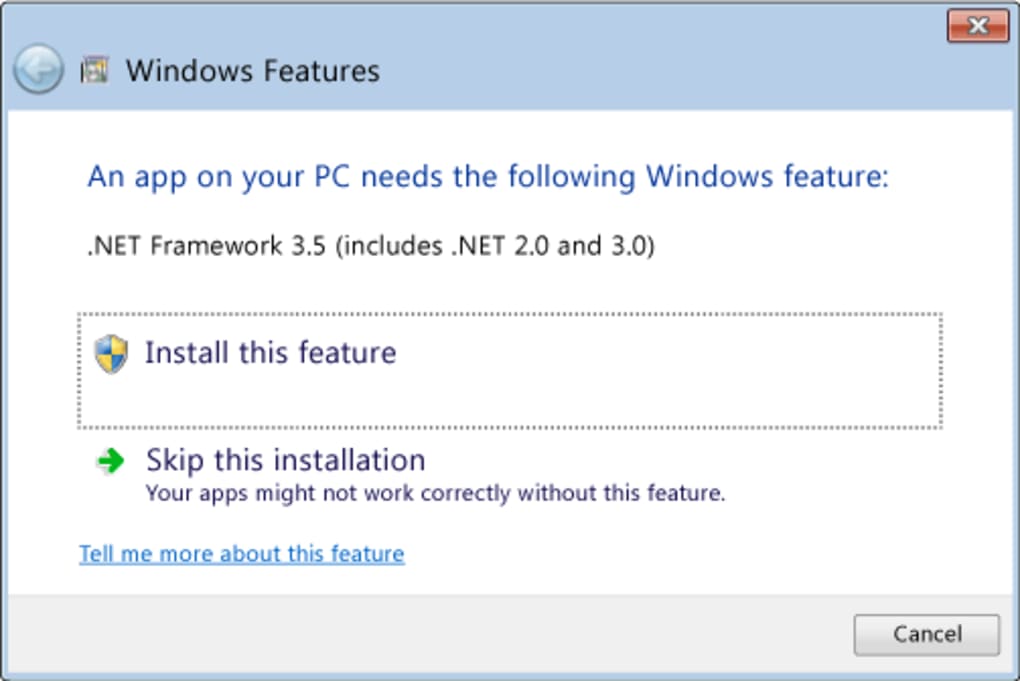
At its heart, the .NET Framework 3.0 provided a robust collection of libraries, common language runtime (CLR) functionalities, and a range of supporting files. These components worked in concert to ensure the seamless execution of .NET applications. Crucially, it resolved the common frustration of encountering error messages related to missing DLLs or other runtime dependencies, significantly improving the user experience. The installation process itself was straightforward, utilizing a simple wizard-driven interface, minimizing technical hurdles for users.
The significance of the .NET Framework 3.0 is best understood by examining its key components:
-
Windows Presentation Foundation (WPF): WPF revolutionized user interface (UI) design. It moved away from the traditional Windows Forms approach, embracing a vector-based rendering system that allowed for richer, more visually appealing interfaces. This included support for animation, 2D and 3D graphics, and more flexible layout management. WPF facilitated the creation of modern, visually stunning applications that could adapt seamlessly to different screen resolutions and display technologies.
-
Windows Communication Foundation (WCF): WCF addressed the challenge of seamless communication between different applications and systems. It provided a unified programming model for building service-oriented architectures (SOA), enabling applications to exchange data and interact regardless of their underlying technologies or platforms. This facilitated distributed application development, allowing developers to create applications composed of independent services that communicated through standardized protocols. WCF’s versatility extended to handling various communication protocols, ranging from simple HTTP requests to more complex messaging systems.
-
Windows Workflow Foundation (WF): WF introduced a powerful framework for modeling and executing business processes. It allowed developers to represent complex workflows visually, using a graphical designer to define the sequence of activities and their dependencies. This approach provided a more intuitive and maintainable way to manage intricate business logic, making it easier to build robust and adaptable applications. WF’s ability to handle asynchronous operations and exception management enhanced the resilience and reliability of these process-driven applications.
-
Windows CardSpace: CardSpace, though less widely adopted than the other components, aimed to simplify user authentication and identity management. It provided a user-friendly interface for managing digital identities and selecting the appropriate credentials for accessing online services. This functionality aimed to improve online security and reduce the complexity of managing multiple user accounts across different websites and applications. While its vision was forward-thinking, CardSpace faced challenges in achieving widespread adoption.
Addressing the Need for a Unified Runtime Environment
Before the introduction of the .NET Framework, application development often involved wrestling with diverse runtime dependencies and compatibility issues. Different applications might rely on distinct libraries, leading to conflicts and errors if those libraries weren’t properly installed or managed. This often resulted in frustrating error messages for end-users, requiring technical expertise to resolve.
The .NET Framework 3.0 dramatically improved this situation by providing a unified runtime environment. Applications built using the .NET framework relied on the core components provided by this framework, eliminating the need for each application to bundle its own set of libraries. This streamlined the installation process and improved application compatibility. The common language runtime (CLR) played a vital role, managing memory allocation, garbage collection, and exception handling, ensuring consistent application behavior across different systems.
The Impact on Application Development
The introduction of .NET Framework 3.0 and its constituent technologies had a profound impact on how developers approached application design. The shift towards service-oriented architectures, facilitated by WCF, enabled the creation of more modular and maintainable applications. WPF’s focus on visual richness improved the user experience, attracting a broader range of users with its enhanced aesthetics and interactivity. WF’s visual workflow modeling improved the development and management of business processes, making complex systems more manageable.
The integration of these technologies within a unified framework promoted code reusability and consistency. Developers could leverage existing libraries and components, reducing development time and improving the quality of their applications. This streamlined development process led to faster application development cycles and more responsive software solutions.
Beyond the Core: Extending Functionality
While the core components of .NET Framework 3.0 provided a powerful foundation, the framework also benefited from its extensibility. Developers could create custom components and libraries that extended the framework’s capabilities, tailoring it to meet specific application needs. This fostered innovation, allowing developers to push the boundaries of what was possible with .NET applications.
The open nature of the .NET Framework also fostered a vibrant community of developers who contributed to its evolution. Shared code, libraries, and best practices accelerated the pace of development and ensured that the framework remained relevant and adaptive to changing technological landscapes.
Legacy and Continued Relevance
Despite newer frameworks like .NET Core and .NET 5 (and its successors), .NET Framework 3.0 remains significant due to its historical importance and its continued presence in numerous legacy applications. Many systems still rely on applications built using this framework, making its understanding crucial for maintaining and updating these systems. The technologies introduced in .NET Framework 3.0 laid the foundation for subsequent advancements in .NET, shaping the evolution of the platform into its current iteration.
Conclusion
The Microsoft .NET Framework 3.0 stands as a remarkable achievement in software engineering. Its unified runtime environment, along with the transformative technologies of WPF, WCF, WF, and CardSpace, redefined the landscape of Windows application development. By promoting code reusability, enhancing visual appeal, streamlining communication, and facilitating process modeling, it empowered developers to create a new generation of applications that were both powerful and user-friendly. Though superseded by more modern .NET implementations, its legacy continues to shape the platform’s trajectory, and its influence remains palpable in today’s applications. Its impact goes far beyond its initial release, serving as a pivotal step in the ongoing evolution of the .NET ecosystem.
File Information
- License: “Free”
- Latest update: “June 26, 2025”
- Platform: “Windows”
- OS: “Windows 2003”
- Language: “English”
- Downloads: “798.3K”
- Size: “225.27 MB”


