KIDS, developed by Playables and published by Double Fine Presents, is an adventure game that defies easy categorization. It presents a unique and unsettling experience, eschewing traditional narratives, objectives, and even a clear endgame. Instead, it offers a surreal and atmospheric journey that invites players to interpret the meaning and purpose behind its peculiar mechanics and visuals. This review will delve into the game’s mechanics, its strengths and weaknesses, and its overall impact.
Gameplay and Mechanics: Herding Humanoids in a Bizarre World
The core gameplay of KIDS revolves around controlling and manipulating a group of humanoid figures. These figures inhabit a stark, minimalist world divided into two distinct areas: a bright white surface and a dark, seemingly bottomless void. Players interact with these humanoids by moving them across the screen, either guiding them in cohesive groups or disrupting their movements to create chaos. The goal, if one can even be identified as such, is to clear the white surface of these figures. However, simply removing them isn’t enough; they perpetually respawn on the white surface, creating an endless cycle of herding and removal.
The mechanics are refreshingly simple. Controls are intuitive, allowing players to easily guide the humanoids with minimal fuss. This simplicity, however, is both a strength and a weakness. The ease of control allows players to fully focus on the atmospheric experience and their own interpretations of the game’s purpose, but it also highlights the game’s lack of depth and complexity in terms of gameplay progression or challenge.
Atmospheric Design and Ambiguity: Art for Art’s Sake?
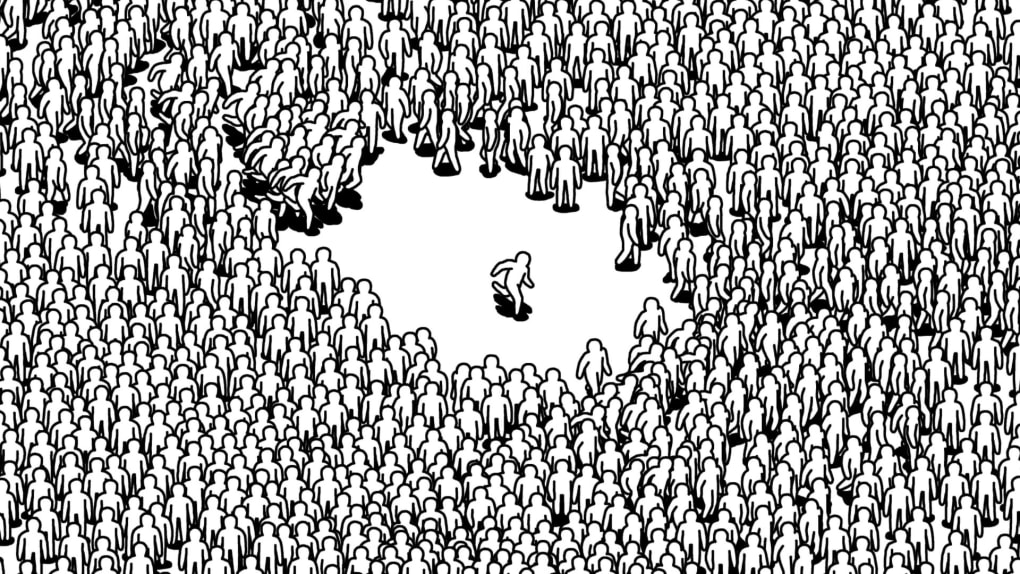
The game’s aesthetic is arguably its most striking feature. The stark contrast between the bright white surface and the inky black void creates a visually arresting environment. The humanoids themselves are simplistic in design, yet their movements and interactions create a strangely captivating spectacle. The overall atmosphere is both unsettling and mesmerizing, evoking feelings of unease and curiosity.
The deliberate lack of a narrative or clear objectives forces players to engage with the game on a purely experiential level. It is a game that actively resists interpretation, leaving the player to contemplate the meaning behind the humanoids’ behavior and their interactions within this minimalist world. Is it a social commentary? A psychological study? Or is it simply an exploration of artistic expression for its own sake? The answer, like the game itself, is open to interpretation and leaves a lasting impression of ambiguity.
Strengths and Weaknesses: A Double-Edged Sword
KIDS boasts several undeniable strengths. Its minimalist design and intuitive controls create a highly accessible experience. The atmospheric visuals and unsettling ambiance are undeniably effective, crafting a unique and memorable gaming experience. The open-ended nature of the game encourages creativity and personal interpretation, fostering a sense of ownership and engagement that few games can match.

However, the game’s strengths also contribute to its weaknesses. The lack of a compelling narrative or clear objectives might be off-putting to players seeking traditional gameplay structures. The simplicity of the controls and the repetitive nature of the core gameplay loop can lead to a feeling of stagnation after a short playtime. The surreal nature of the experience, while impactful, may also be too much for some players. The game’s short playtime, particularly concerning the absence of a defined ending, may leave some feeling unsatisfied.
This lack of clear direction, while fitting the game’s overall artistic vision, also hinders its potential for replayability. While players might initially be intrigued by the ambiguity, the repetitive nature of the gameplay might discourage repeated playthroughs. Without a changing narrative or evolving mechanics, the experience after the first few sessions might feel rather repetitive, even if the aesthetic still holds a certain charm.
Platform Availability and Technical Aspects
KIDS is available on multiple platforms, including Windows, Android, and iOS. The game is relatively lightweight, ensuring compatibility across a wide range of devices. The performance is generally smooth, although minor graphical glitches or performance issues might occur depending on the device used. The game supports multiple languages, enhancing its accessibility for a global audience. The multilingual support includes, but is not limited to, German, English, Spanish, French, Italian, Japanese, Korean, Portuguese, Russian, and Chinese.
Comparison to Similar Games: A Unique Niche
While there are few games that directly mirror KIDS’s unique approach, its minimalist design and focus on atmospheric experience draw comparisons to certain indie titles that prioritize mood and player interpretation over traditional game mechanics. However, the sheer ambiguity and lack of defined objectives differentiate KIDS from most other games in the market. It occupies a niche space, appealing to players seeking unconventional and atmospheric experiences that prioritize artistic expression over narrative-driven gameplay.
Overall Impression: A Thought-Provoking, If Flawed, Experience
KIDS is not a game for everyone. Its lack of traditional game mechanics, its short playtime, and its overtly surreal nature will undoubtedly deter some players. However, for those willing to embrace its ambiguity and appreciate its artistic merit, KIDS offers a unique and thought-provoking experience. The game’s atmospheric design, minimalist aesthetics, and open-ended nature create a strangely captivating and unforgettable journey.
While its shortcomings in terms of gameplay depth and replayability are undeniable, KIDS’s artistic vision and its willingness to challenge conventional game design earn it a place amongst unique and memorable indie titles. It is a game that prioritizes artistic expression over traditional gaming conventions, and as such, it should be judged accordingly. Whether you find its surreal atmosphere captivating or frustrating depends largely on your individual preferences and expectations. Ultimately, KIDS is a game that stays with you long after the credits roll, prompting reflection on its meaning and leaving a lasting impression even if the time spent playing is relatively short. The experience is unconventional, but in a world often over-saturated with conventional gameplay structures, that unconventional approach is arguably refreshing.
File Information
- License: “Full”
- Version: “varies-with-device”
- Latest update: “June 14, 2023”
- Platform: “Windows”
- OS: “Windows 10”
- Language: “English”
- Downloads: “1.2K”