
In the vast and ever-evolving landscape of video games, few titles have managed to etch their name into the annals of history with the same indelible mark as Myst. Originally launched in 1993 by the visionary team at Cyan Worlds, Myst wasn’t just a game; it was a cultural phenomenon, a paradigm shift that redefined what interactive entertainment could be. Breaking away from the prevalent action-oriented and combat-heavy genres of its era, Myst presented players with a meticulously crafted universe built on mystery, exploration, and intellectual challenge. Its immersive point-and-click gameplay, coupled with an enthralling, non-linear plot and distinct, pre-rendered graphics, immediately set it apart, garnering critical acclaim and an immense following.
Decades later, Myst’s enduring legacy continues to captivate new generations of players, thanks in part to its meticulously remastered iterations. These updated versions successfully bridge the gap between retro charm and modern sensibilities, enhancing the original experience with improved audio-visuals while preserving the intricate puzzles and captivating storyline that made the game a masterpiece. Like well-loved titles that center on discovery and problem-solving, such as Eastshade and The Witness, Myst offers an experience rich in unexpected twists and a narrative depth that demands engagement. It is a journey into a world shrouded in enigma, where every click of the mouse is a step closer to unraveling a profound truth, promising a unique and unforgettable gaming experience that prioritizes mental acuity over mere reflexes.
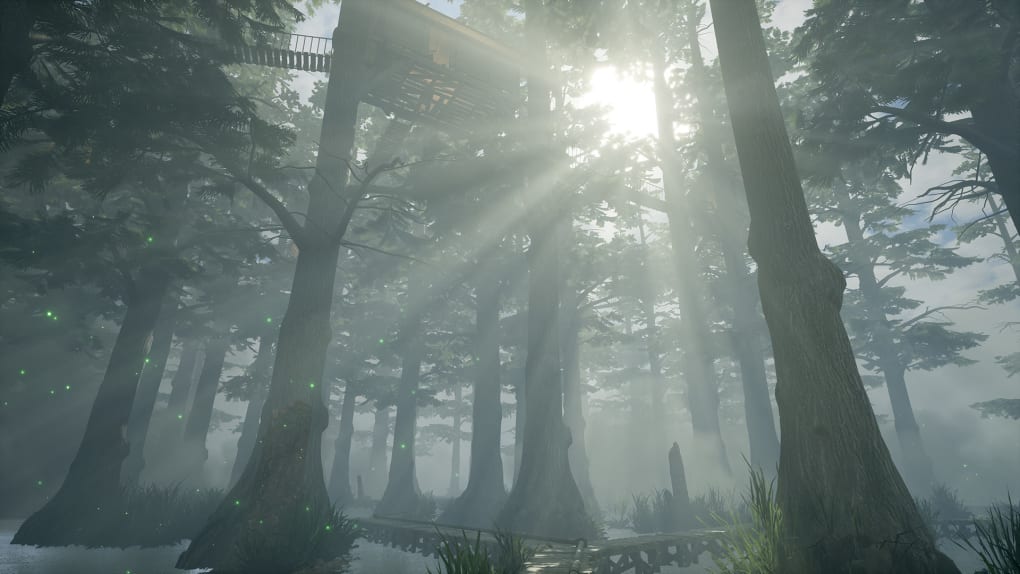
The Allure of Adventure Games: Myst’s Enduring Appeal
At its core, Myst is the epitome of the adventure game genre, albeit one that charts its own course. It is an experience devoid of combat, jump scares, or timed sequences, focusing instead on the quiet contemplation of complex environments and the systematic deconstruction of intricate puzzles. This approach positions Myst as a cerebral challenge, appealing to those who relish intellectual engagement and the thrill of discovery rather than adrenaline-fueled action.
The narrative thrust of Myst centers around a faceless stranger – the player – who stumbles upon a mysterious book. This book, an “Age Book,” transports them to the enigmatic island of Myst. Here, the player discovers the tragic tale of Atrus, a brilliant D’ni Age-writer, and his two sons, Sirrus and Achenar, both of whom have been trapped within separate Age Books due to their respective misdeeds. To free them, and in doing so, unravel the overarching mystery of their vanishing, the player must meticulously investigate the island and its various “Ages” – other worlds linked through similar books. These Ages are not merely backdrops but integral components of the grand puzzle, each holding clues, mechanisms, and secrets essential for progression.
One of Myst’s most groundbreaking features at the time was its non-linear storyline. Unlike many games that dictated a strict path, Myst allowed players to explore the island and its interconnected Ages in almost any order they chose. This freedom of exploration fostered a deep sense of immersion and personal agency. The implications of this design extend to the game’s multiple endings, which are directly influenced by the player’s choices and discoveries throughout their journey. This element of player-driven narrative added significant replay value and encouraged meticulous investigation, as missing a single clue could alter the outcome.
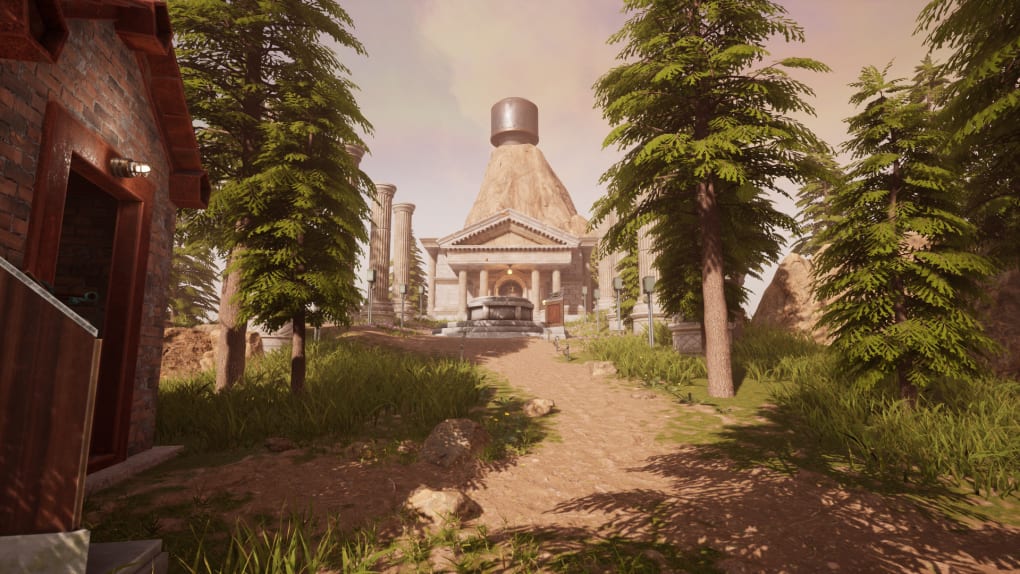
The puzzles in Myst are not standalone challenges but “convoluted barricades” that are profoundly interlinked. Deciphering one puzzle often provides the key or a crucial piece of information needed to solve another, creating a satisfying chain reaction of discovery. This interconnectedness demands a holistic understanding of the game world, encouraging players to take notes, draw maps, and piece together seemingly disparate fragments of information. The game’s focus on intricate environmental puzzles, logical deduction, and pattern recognition makes it a true test of observation and problem-solving skills. It’s an adventure that requires patience, critical thinking, and an open mind, proving that a compelling narrative doesn’t always need a sword or a gun to be engaging.
Immersive Multimedia: Graphics, Sound, and Atmosphere
When Myst first launched, its aesthetic presentation was nothing short of revolutionary. In an era dominated by pixelated sprites and rudimentary 3D models, Myst utilized sophisticated pre-rendered graphics that gave its environments an unprecedented level of detail and realism. This attention to visual fidelity immediately set it apart, creating a world that felt tangible and alive, even with its static, picture-like screens. The game’s aesthetics drew heavy inspiration from the Steampunk theme, infusing its machines, architecture, and overall atmosphere with a distinctive blend of Victorian-era industrialism and fantastical ingenuity. This unique stylistic choice contributed significantly to the game’s enigmatic charm, making every corner of Myst Island and its linked Ages a feast for the eyes and a canvas for mystery.
The sophisticated and detailed graphics were not just for show; they were integral to the gameplay. Clues were often subtle, embedded within the environment itself – a flicker of light, a peculiar shadow, a specific architectural detail. Players had to pay close attention to the visual language of the game to uncover its secrets. The remastered versions of Myst further elevate this visual experience. Leveraging modern rendering techniques and higher resolutions, these iterations breathe new life into Cyan Worlds’ original artistic vision, making the intricate details sharper, the colors more vibrant, and the overall presentation more immersive than ever before, whether viewed on a traditional 2D display or in virtual reality environments. The ability to explore these meticulously designed worlds with enhanced clarity deepens the sense of presence and wonder.
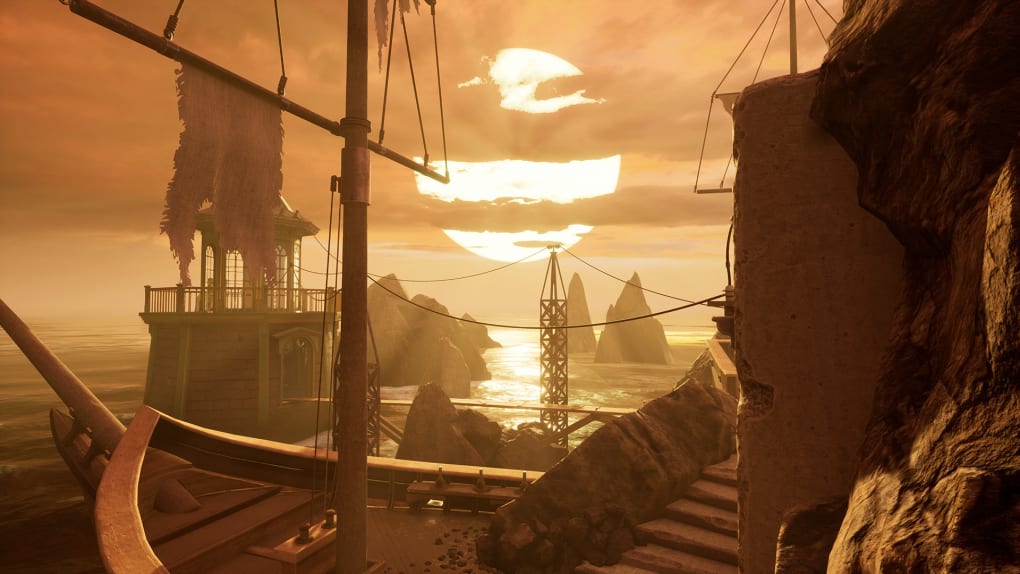
Complementing the visual splendor is Myst’s haunting and atmospheric soundtrack. The audio design is minimalistic yet profoundly effective, eschewing grand orchestral scores for subtle environmental sounds, melancholic melodies, and ambient tones that perfectly underscore the game’s sense of isolation and mystery. The creaking of gears, the distant chirping of unseen creatures, the gentle lapping of waves against the shore, and the occasional, poignant musical cue all coalesce to create an auditory landscape that draws the player deeper into the game world. This careful blend of sound and silence enhances the immersive quality of the game, evoking emotions of curiosity, solitude, and a pervasive sense of the unknown. The remastered versions have also improved the fidelity of these audio elements, ensuring that every whisper of the environment and every note of the soundtrack contributes to the unparalleled atmosphere. To begin your quest, a simple click on any location is all it takes, triggering actions, puzzles, and events, each accompanied by the meticulously crafted visual and auditory cues that define the Myst experience.
A Challenge for the Mind: The Educational & Reference Aspects of Myst’s Puzzles
Beyond its captivating narrative and stunning visuals, Myst’s most profound impact lies in its design as a “cerebral challenge.” The game is, in essence, a masterclass in interactive problem-solving, making it an experience that can be likened to an educational journey in logic and deduction. The puzzles are not arbitrary obstacles but integral parts of the game’s lore and mechanics, often requiring players to “learn” the rules of each Age and the functions of its strange devices. This fosters an almost academic approach to gameplay, where observation, hypothesis testing, and systematic reasoning are key.
The intricate nature of Myst’s puzzles demands more than just casual engagement; it often requires a degree of mental discipline akin to studying. Players must act as detectives, anthropologists, and engineers, all rolled into one. They must carefully read notes left by Atrus and others, interpret cryptic symbols, decipher complex machinery, and understand the subtle clues embedded in the environment. For instance, a sound sequence heard in one part of the island might be the precise combination needed to activate a device in another Age. A diagram found in a hidden room could be the blueprint for solving a seemingly unrelated mechanism. This intricate web of interconnected puzzles forces players to synthesize information from various sources, akin to cross-referencing research materials.
While this depth is a core strength, it also presents a significant challenge. Some puzzles can be exceedingly difficult to solve for casual players, requiring considerable patience and persistence. This difficulty, however, is a deliberate design choice that enhances the sense of accomplishment when a solution is finally unearthed. The “aha!” moment, when seemingly disparate pieces of information click into place, is deeply rewarding. This process of overcoming intellectual hurdles is where Myst truly shines as an “educational” experience, honing skills in critical thinking, pattern recognition, and long-term memory. It encourages players to think outside the box, to question assumptions, and to approach problems from multiple angles – skills that are valuable far beyond the confines of the game. Myst proves that a game can be both deeply entertaining and intellectually stimulating, offering a unique blend of adventure and mental exercise.
The Legacy and Modern Reimagining of Myst
Myst’s impact on the video game industry is undeniable, solidifying its status as a timeless masterpiece that continues to captivate both adventure seekers and puzzle enthusiasts. Its groundbreaking approach to non-linear storytelling and what could be considered an early form of open-world exploration cemented its place among the forerunners of immersive gaming experiences. Before the term “open world” became ubiquitous, Myst presented players with a vast, interconnected environment ripe for discovery, where the narrative unfolded organically based on their exploration rather than a predetermined sequence of events.
The game’s initial success spurred numerous sequels, spin-offs, and literary adaptations, creating a rich universe that deepened its lore and expanded its reach. However, as technology advanced, the original Myst began to show its age, particularly in its static pre-rendered graphics and technical compatibility. The challenge for Cyan Worlds was to bring this beloved classic into the digital era without compromising its fundamental appeal. The remastered versions, available across various platforms including Windows, Mac, Xbox Series X|S, and Xbox One, have successfully achieved this delicate balance.
These updated iterations elevate the gaming experience to new levels, not by reinventing the core game, but by enhancing its existing strengths. Improved audio-visuals, modern interface refinements, and compatibility with contemporary hardware ensure that new players can experience Myst with a fidelity that matches or even surpasses the original’s groundbreaking impact. This successful transition allows Myst to hold its own against newer releases, demonstrating that compelling design and intricate storytelling transcend technological generations. The emphasis remains firmly on the player’s mental acuity, challenging them to unravel the profound mysteries of the Ages.
As a product available on platforms like PhanMemFree.org, Myst continues to receive attention and downloads, indicating its enduring popularity. The game’s strong points are consistently highlighted by players and critics: an excellent puzzle game offering an engaging narrative, featuring captivating graphics, and boasting a riveting soundtrack. While some players might find the complexity of its puzzles a significant hurdle, this very characteristic is also what defines its unique charm and intellectual depth. Developed by the visionary Cyan Worlds Inc, Myst is available in numerous languages – including English, French, Italian, German, Japanese, Korean, Spanish, Portuguese, Chinese, Russian, Polish, Thai, Turkish, and Vietnamese – making its intricate worlds accessible to a global audience. Its consistent presence in “top downloads” and “related topics” sections on platforms like PhanMemFree.org further underscores its lasting relevance and appeal as a benchmark for story-driven, logic-based adventure games.
In conclusion, Myst is more than just a game; it is an experience that transcends time and technology. Its intricate narrative, challenging puzzles, pioneering graphics, and atmospheric sound design coalesce to create a unique world that begs to be explored. Whether you are a veteran player revisiting a cherished classic or a newcomer embarking on this odyssey for the first time, Myst offers a profound and rewarding journey into enigmatic worlds. It remains a testament to the power of imagination and the enduring appeal of intellectual adventure, solidifying its place as an irreplaceable gem in the pantheon of video games.
File Information
- License: “Full”
- Version: “varies-with-devices”
- Latest update: “July 4, 2023”
- Platform: “Windows”
- OS: “Windows 10”
- Language: “English”
- Downloads: “1.8K”


