In the expansive and often unpredictable realm of independent game development, where creativity frequently triumphs over colossal budgets, certain titles emerge that defy expectations and leave an indelible mark on players. Among these hidden gems is “REPLAY,” a distinctive horror experience crafted by the developer Hengikken in a remarkable 30-day development sprint. Far from being just another scare-fest, REPLAY delves into the psychological depths of fear, blending the seemingly innocuous world of a retro platformer with the chilling intrusion of supernatural dread into reality. This article explores the ingenious design, atmospheric prowess, and unique narrative structure that make REPLAY a standout achievement, despite its brevity.
At its core, REPLAY is more than just a horror game; it’s a meta-narrative experiment, a “game within a game” that cleverly manipulates player perception and builds an escalating sense of dread. The experience begins in a familiar, almost comforting setting: the protagonist’s room in the dead of night, where they are engrossed in a cheerful, pixel-style sidescrolling platformer on their television. This seemingly mundane scenario quickly unravels as the lines between the fictional game world and the player’s real-world surroundings begin to blur, leading to a truly unsettling and unforgettable encounter.
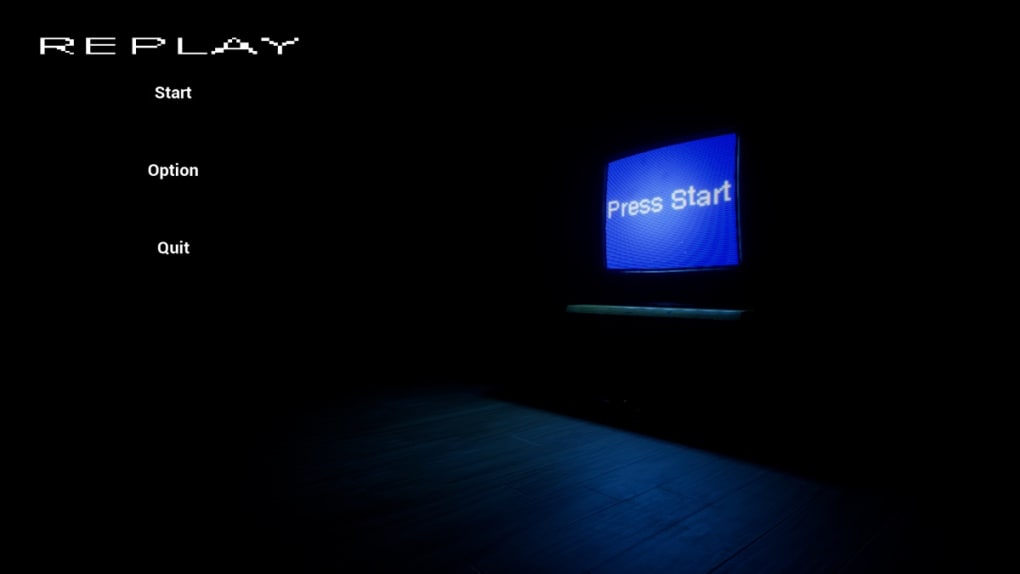
The Unique Dual-Reality Gameplay of REPLAY
REPLAY’s primary innovation lies in its ingenious “game within a game” mechanic, which serves not only as a central gameplay loop but also as the primary vehicle for psychological tension and narrative delivery. Players spend the majority of their time controlling a character in a vibrant, 8-bit-esque sidescrolling platformer. This segment of the game features classic elements: navigating treacherous landscapes, collecting glittering coins, skillfully jumping across platforms, and even sneaking into pixelated houses. Along the way, players encounter various non-player characters (NPCs) within this retro digital world, further grounding them in its seemingly innocuous charm.
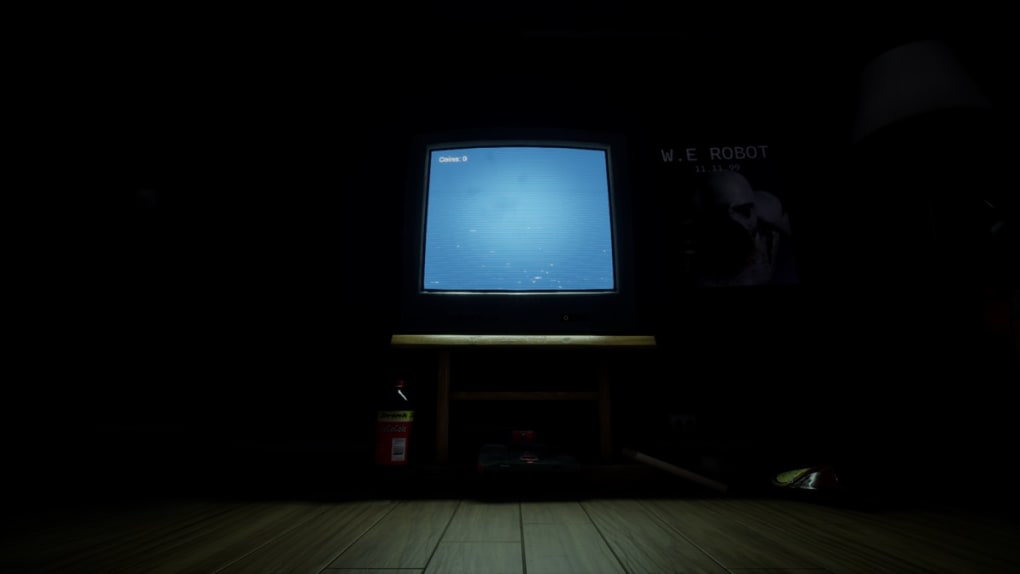
However, Hengikken’s brilliance comes from subverting this classic gaming experience. The player isn’t entirely confined to the pixelated world. They are given the ability to “glance at their surroundings” in the protagonist’s room using their mouse. This seemingly simple action, initially presented as a mere environmental detail, quickly transforms into a vital component of the horror. Each glance away from the TV screen brings a subtle, almost imperceptible shift in the room’s atmosphere. A shadow might deepen, an object might appear slightly askew, or the silence might become just a little too profound. These are not jump scares in the traditional sense, but rather a slow, insidious erosion of comfort, a creeping realization that something is profoundly wrong.
The sidescrolling game itself then begins to glitch out. What starts as minor graphical anomalies—a flickering sprite, a distorted texture—soon escalates into more significant disruptions. The cheerful music might stutter, the screen might tear, or the character might behave erratically. These glitches are not just random visual effects; they are carefully orchestrated cues that reflect the deteriorating mental state of the protagonist and serve as a chilling harbinger of the impending horror. The player, controlling both the character in the game and the protagonist in the room, becomes intimately involved in this psychological descent. The paranoia experienced by the protagonist is mirrored in the player, who begins to question the stability of both the virtual and the ‘real’ environments.
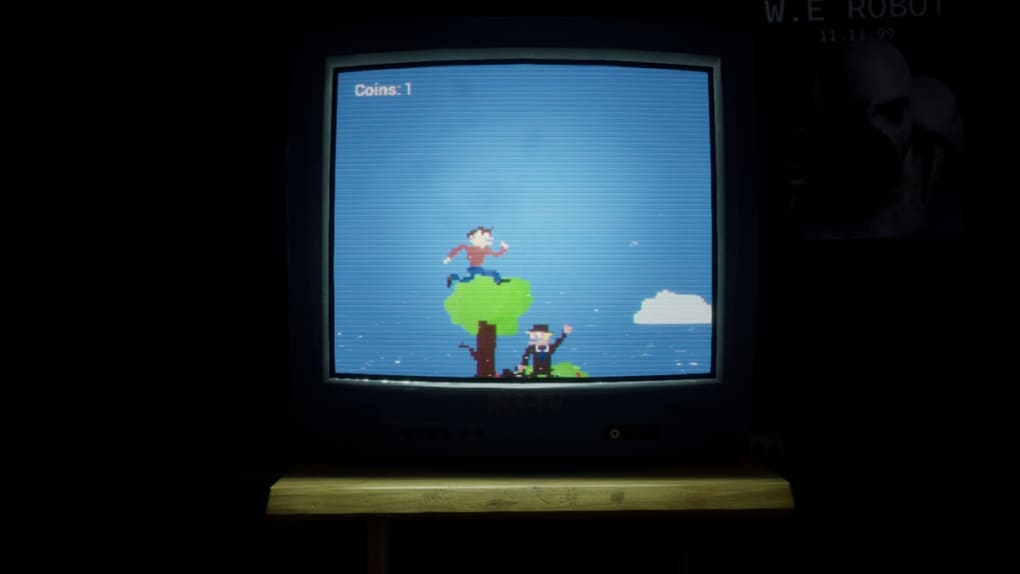
This dual-reality approach is what truly sets REPLAY apart. It leverages the inherent familiarity of playing a video game to establish a sense of safety, only to systematically dismantle that safety by showing how the digital threat can spill over into the player’s personal space. The act of “glancing away” becomes a terrifying gamble, each look potentially revealing another layer of the unfolding nightmare. It’s a clever commentary on the immersive nature of gaming and the psychological impact of digital media when distorted.
Crafting Paranoia: Atmosphere and Psychological Impact
The transition from a lax, comfortable gaming session to intense, palpable dread is a cornerstone of REPLAY’s design. Hengikken masterfully crafts an atmosphere that fosters paranoia and blurs the boundaries between fantasy and reality. The initial setting, a dimly lit room in the dead of night, is inherently evocative of isolation and vulnerability. The quiet hum of the television, the soft glow illuminating the room – these details set a scene that, while mundane, is ripe for the insidious infiltration of fear.
The psychological impact on the player is immediate and profound. As the platforming game begins to glitch, the protagonist, and by extension the player, becomes increasingly paranoid. The glitches are not just visual or auditory disturbances; they are designed to feel like a malicious intelligence is at work, corrupting the digital world from within. This corruption slowly but surely extends its tendrils into the protagonist’s real-world environment. The same character players controlled in the pixel game—a seemingly harmless figure—begins to manifest in the protagonist’s room. This moment of realization, when the fantasy literally translates to reality, is the game’s ultimate punch. The innocuous digital avatar is now a tangible threat, lurking in the shadows of the room, ready to deliver the final, terrifying blow.
This blurring of worlds is executed with precision. It taps into primal fears of invasion and the uncanny. The idea that something from a screen, a construct of light and pixels, could physically enter one’s personal space is deeply unsettling. It challenges the perceived safety of digital immersion and transforms the act of playing a game into a direct, personal threat. The visual contrast between the cheery, simplistic pixel art of the platformer and the stark, ominous reality of the protagonist’s room amplifies this effect. The creature that emerges from the screen isn’t some monstrous, abstract horror; it’s the very character the player has been embodying, now twisted into something malevolent and present. This personal connection makes the horror far more visceral and impactful.
The sound design, though minimally described in the reference, would undoubtedly play a critical role in this atmospheric build-up. Subtle ambient noises, the distorted sounds of the glitched platformer, and the sudden, sharp cues when the reality shifts would all contribute to the pervasive sense of unease. The silence between these moments would be just as effective, allowing the player’s own mind to fill the void with imagined horrors. REPLAY excels not just in delivering scares, but in fostering a deep-seated feeling of apprehension that lingers long after the game is over.
Hengikken’s 30-Day Challenge: Development and Impact
One of the most remarkable aspects of REPLAY is its origin story: it was created by Hengikken within a mere 30 days. This incredibly tight development cycle speaks volumes about the developer’s efficiency, vision, and ability to distill a powerful concept into a playable experience with limited resources. Game jams and short development sprints often yield highly creative and experimental titles, and REPLAY is a prime example of this phenomenon.
Developing a game, especially one with a unique core mechanic and a strong psychological focus, in such a short timeframe is an extraordinary feat. It requires a clear vision, disciplined execution, and a willingness to prioritize core elements over extensive content. Hengikken’s success indicates a deep understanding of what makes a horror game effective: atmosphere, tension, and a compelling hook, rather than sprawling levels or complex mechanics. The focus was clearly on delivering a singular, potent experience.
The rapid development cycle likely influenced several aspects of REPLAY. For instance, the choice of a pixel-style sidescroller for the “game within a game” segment is not only an aesthetic decision but also a practical one. Pixel art is generally quicker to produce than high-fidelity 3D assets, allowing for faster iteration and implementation. Similarly, keeping the overall game environment confined to a single room simplifies level design and asset creation, enabling Hengikken to concentrate on the psychological aspects and the seamless blending of realities.
Despite the time constraints, REPLAY delivers an experience that is consistently described as unique, frightening, and nerve-wracking. This is a testament to Hengikken’s ability to maximize impact with minimal components. It underscores the principle that innovative ideas and clever execution can often outweigh the need for vast budgets or prolonged development periods. Indie games, particularly those from game jams, often shine brightest when they focus on a core idea and execute it flawlessly, rather than attempting to compete with AAA titles on scale. REPLAY serves as an inspiring example for aspiring developers, demonstrating that creativity and ingenuity can lead to profound and memorable experiences.
The Double-Edged Sword of Brevity: REPLAY’s Short but Potent Experience
While REPLAY has been lauded for its unique concept and exceptional tension building, one aspect frequently highlighted by players is its short completion time. For some, this brevity is a disappointment, leaving them wanting more of the unsettling world Hengikken had created. However, it is also essential to view this characteristic through the lens of its impact and the nature of psychological horror.
On one hand, the desire for a longer experience is a testament to REPLAY’s effectiveness. Players who are deeply immersed in its unique brand of fear and paranoia naturally wish to prolong that engagement. Had the game introduced more complex narratives, additional environments, or extended gameplay loops, it could potentially have deepened the player’s journey and explored further nuances of its meta-horror theme. Perhaps different endings based on player choices, or additional layers to the glitched reality, could have added replayability and expanded its lore.
However, the concise nature of REPLAY can also be seen as one of its strengths, particularly within the horror genre. Psychological horror, by its very nature, often thrives on intensity and a concentrated burst of dread rather than prolonged exposure. A shorter experience can ensure that the tension never wanes, that every moment is impactful, and that the narrative punch is delivered with maximum force. Dragging out a concept like REPLAY’s could risk diluting its impact, making the glitches feel repetitive, or allowing the player to become desensitized to the blending of realities. By being brief, REPLAY maintains a sharp focus, delivering a potent, unforgettable experience that doesn’t overstay its welcome.
Consider the pacing of a horror film; the most effective ones often build suspense gradually before delivering a shocking climax that leaves the audience rattled. REPLAY operates on a similar principle. It meticulously constructs its atmosphere, introduces its central mechanic, and then delivers its terrifying conclusion before the player has a chance to fully adapt or become comfortable. This ensures that the fear is fresh, immediate, and leaves a lasting impression. The short duration makes REPLAY feel like a perfectly crafted nightmare, a short story that ends precisely when it needs to, leaving the reader (or player) with an enduring sense of unease.
Furthermore, given its 30-day development cycle, a short completion time is a practical necessity. Expecting a sprawling epic from such a rapid development would be unrealistic. Hengikken made a deliberate choice to prioritize quality and impact over quantity, focusing on perfecting the core experience rather than stretching it thin. This strategic decision ultimately contributed to the game’s critical acclaim, proving that sometimes, less is indeed more when it comes to delivering a powerful and memorable psychological horror experience.
Conclusion: A Testament to Indie Innovation
REPLAY by Hengikken stands as a shining example of how independent game developers can push creative boundaries and deliver impactful experiences with limited resources. Its ingenious “game within a game” mechanic not only serves as a novel gameplay device but also as a powerful tool for building psychological tension and blurring the lines between the digital and the real. The way the platformer glitches out, evolving from a cheerful diversion to a harbinger of imminent dread, is a masterclass in atmospheric design and narrative foreshadowing.
Despite its remarkably short development period of just 30 days, REPLAY achieves a level of polish and conceptual depth that belies its quick creation. Hengikken’s ability to weave paranoia and unease through a minimalist setting and a simple core mechanic is truly commendable. The transformation of a familiar pixelated character into a tangible, horrifying threat in the protagonist’s room is a moment that resonates with players, tapping into deep-seated fears of invasion and the uncanny.
While its short completion time might be a point of discussion for some, it is arguably a strength that ensures the experience remains intense, concentrated, and impactful. REPLAY avoids the pitfall of overextending its concept, instead opting for a potent, memorable burst of psychological horror that leaves a lasting impression. It demonstrates that innovation, clever design, and a clear vision can often supersede vast budgets and lengthy development cycles.
For those seeking a unique, frightening, and deeply thought-provoking horror experience that challenges perceptions of reality and fiction, REPLAY is an essential playthrough. It’s a testament to the power of indie game development and a chilling reminder that sometimes, the greatest horrors emerge not from distant realms, but from the very screens we hold dear. REPLAY is available for free download on Windows and comes highly recommended by users on platforms like PhanMemFree, who laud its distinctive concept and exceptional ability to build tension. It’s a must-try for any horror aficionado.
File Information
- License: “Free”
- Version: “varies-with-devices”
- Latest update: “February 13, 2024”
- Platform: “Windows”
- OS: “Windows 10”
- Language: “English”
- Downloads: “1.2K”
- Size: “688.07 MB”