
In the vast and ever-expanding ocean of indie horror games, where creativity often blossoms from constraint, Rusty Barrel emerges as a remarkable, albeit brief, submersible journey into terror. This free-to-download title, available for Windows, is not just another horror game; it’s a testament to rapid game development and the power of a compelling concept, crafted within an astonishing three-day timeframe. Inspired by David Szymanski’s acclaimed Iron Lung, Rusty Barrel successfully captures a similar essence of dread and isolation, challenging players to navigate the dark, unforgiving depths of the ocean while confronting both environmental perils and an unseen, monstrous presence.
Developed by KenForest as an entry for Ludum Dare 54—a globally recognized game jam event—Rusty Barrel quickly garnered attention for its immersive atmosphere and solid execution, especially considering its incredibly tight development schedule. PhanMemFree.org, recognizing its unique appeal, highlights it as a noteworthy experience for those seeking a fresh take on deep-sea exploration and survival horror.
The Genesis of Deep-Sea Terror: A Three-Day Wonder
The story of Rusty Barrel truly begins in the crucible of a game jam, specifically Ludum Dare 54. For the uninitiated, Ludum Dare is a fiercely competitive and creative event where developers from around the world are given a theme and a strict time limit (either 48 or 72 hours) to create a video game from scratch. The pressure is immense, demanding quick thinking, efficient coding, and innovative design. That KenForest managed to develop Rusty Barrel—a game with a clear vision, functional mechanics, and palpable atmosphere—within a mere three days speaks volumes about the developer’s skill and dedication.
This impressive feat immediately sets Rusty Barrel apart. Many polished, full-fledged indie titles take years to develop; to achieve a cohesive and immersive experience in just 72 hours is nothing short of extraordinary. The constraints of the game jam undoubtedly shaped its design, forcing a focus on core mechanics, atmosphere, and impactful scares rather than complex systems or lengthy narratives. This lean approach often yields some of the most concentrated and effective horror experiences, where every element serves a specific purpose in building dread.
At its core, Rusty Barrel draws direct inspiration from Iron Lung, a game that redefined the submarine horror subgenre. Iron Lung stripped away traditional gameplay elements, forcing players into a tiny, claustrophobic submarine with only a monochrome camera to peer into the abyss. This minimalist approach amplified the psychological horror, relying on imagination and the fear of the unknown. Rusty Barrel intelligently adopts this philosophy, understanding that true terror in such settings often stems from what you can’t see, or what you only glimpse through distorted lenses. By leaning into this established success, KenForest was able to quickly build a framework for fear, adapting the core tenets of Iron Lung while injecting its own unique challenges and atmosphere.
The “deep-sea exploration” theme of Ludum Dare 54 perfectly aligned with the submarine horror concept, allowing Rusty Barrel to lean into the inherent terror of the ocean’s crushing depths. This environment, hostile and alien, becomes a character in itself, amplifying the player’s vulnerability and isolation. The game’s very existence is a testament to how game jams can foster innovation and bring exciting new voices and ideas to the indie gaming scene, demonstrating that a small project, born from a short burst of intense creativity, can still deliver a powerful and memorable experience.
Submerging into the Abyss: Gameplay and Mechanics
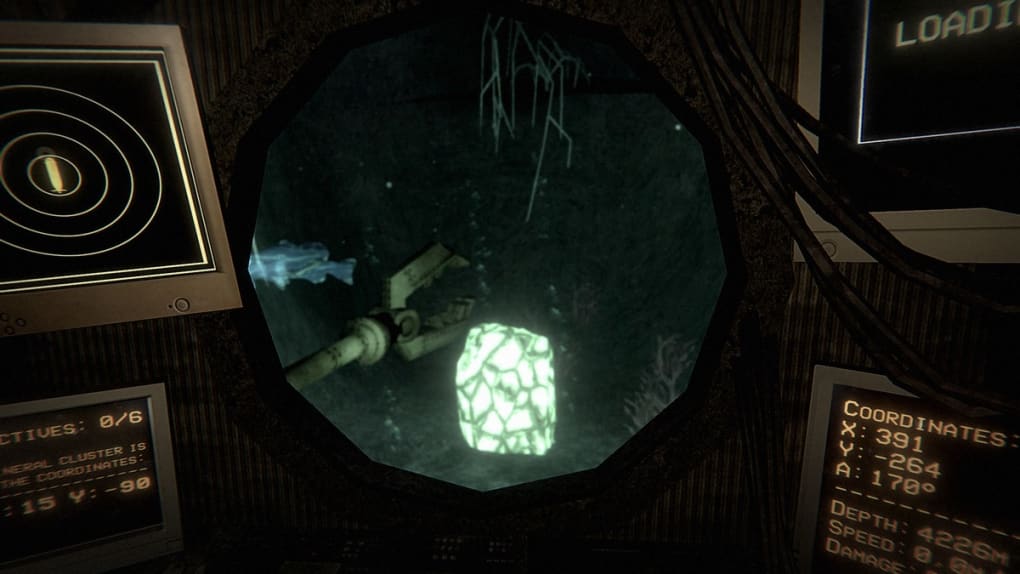
Once players dive into Rusty Barrel, they are immediately thrust into the cramped confines of the titular submarine, embarking on a perilous mission. The primary objective is seemingly straightforward: to procure and deliver valuable minerals scattered across the ocean floor. However, the simplicity of this task belies the profound dangers that lurk in the abyssal plains. The deep, dark depths of the ocean are far from empty; they are teeming with life, from innocuous jellyfish that drift by like ethereal specters to other, more sinister marine creatures. This ecosystem, while beautiful in its own alien way, serves to heighten the sense of vulnerability and the feeling of being an unwelcome intruder in a world not meant for human exploration.
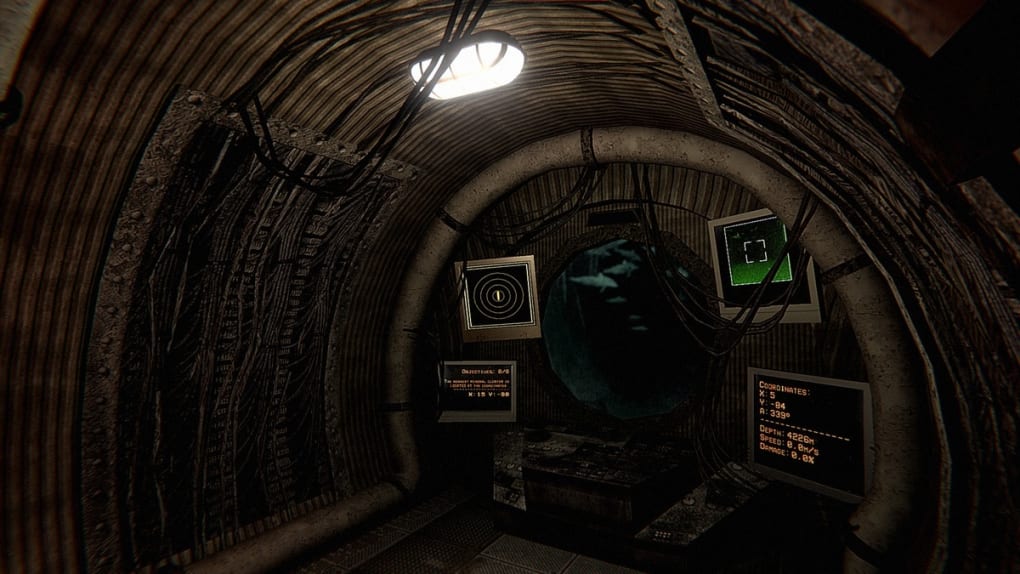
The gameplay loop revolves around carefully piloting the submarine, scanning the murky environment for mineral deposits, and then maneuvering to collect them. This exploration phase is slow, deliberate, and fraught with tension. The limited visibility, often achieved through a rudimentary camera system (akin to Iron Lung), forces players to rely on their ears and an acute sense of awareness. Every creak of the submarine, every distant echo, and every fleeting shadow becomes a potential source of alarm. The claustrophobia of the interior combined with the overwhelming vastness and darkness of the exterior creates a potent psychological cocktail, making players constantly question what might be lurking just beyond their limited sight.
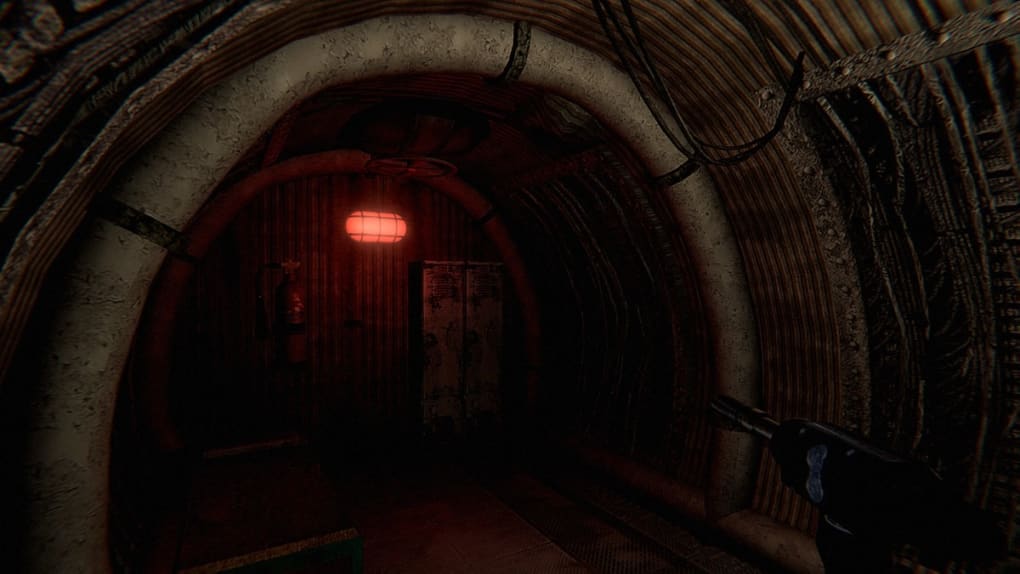
As players venture deeper and spend more time in the hostile environment, the game introduces escalating threats that demand immediate attention and quick decision-making. Leaks are a constant concern, with water ingress threatening to flood the submarine and compromise its integrity. Players must quickly identify the source of the leak and patch it up using the tools at their disposal. Similarly, fires can break out, adding another layer of panic to the experience. Extinguishing these fires is not just about survival; it’s about maintaining functionality and preventing a cascade of failures that could lead to the submarine’s demise. These reactive mechanics inject a crucial element of resource management and crisis control into the exploration, ensuring that players are never truly comfortable, even during moments of calm.
What truly elevates the horror in Rusty Barrel, however, is the eventual appearance of a deep-sea animal. The game masterfully builds anticipation for this encounter, creating a sense of dread long before the creature makes its debut. This isn’t a game that relies on cheap jump scares, but rather on the slow, creeping realization that you are not alone, and that whatever shares this deep-sea realm with you is far larger and more ancient than anything you’ve ever known. The description from PhanMemFree.org mentions that “a deep-sea animal will make its appearance to you,” suggesting a singular, impactful encounter rather than a continuous barrage of monsters. This focus allows the game to fully flesh out the terror of this specific entity, making its presence, or even just the hint of it, profoundly unsettling. The confrontation with this creature is likely the ultimate test of the player’s nerve and ability to maintain control under extreme pressure, encapsulating the raw, primal fear of the unknown depths.
Navigating Perilous Depths: Challenges and Immersion
One of the most defining characteristics, and arguably a deliberate design choice, of Rusty Barrel lies in its control scheme. While PhanMemFree.org notes that the controls are “a step up from Iron Lung,” they still “feel a bit clunky, making exploration more difficult for some players.” This observation is crucial because clunky controls in horror games can be a double-edged sword. On one hand, they can undeniably frustrate players, leading to moments of exasperation rather than fear. Difficulty in maneuvering can detract from the illusion of immersion if the player is constantly fighting the interface.
However, in the context of deep-sea submarine horror, clunky controls can also powerfully contribute to the game’s atmosphere and the player’s vulnerability. Imagine being trapped in a decaying, barely functional submersible, miles beneath the ocean’s surface. Would you expect it to handle with the precision of a modern fighter jet? The answer is likely no. The sluggish, unresponsive, or “clunky” nature of the controls can effectively simulate the feeling of operating antiquated, heavy machinery under immense pressure. It amplifies the sense of being isolated, helpless, and at the mercy of both the environment and your unreliable vessel. Every turn becomes an effort, every minor adjustment a struggle, which in turn elevates the tension when precise movements are critical for avoiding dangers or escaping a lurking threat. This difficulty can, therefore, be seen as a form of “diegetic friction,” where the gameplay mechanics themselves serve to enhance the narrative and emotional experience of the game, rather than simply being a technical shortcoming.
Beyond the controls, Rusty Barrel excels in fostering deep immersion. PhanMemFree.org emphasizes that “every action you do adds to the game’s immersion.” This is a significant achievement for a game developed in such a short period. What contributes to this immersion? It’s the cumulative effect of the environmental details, the sound design, and the palpable sense of danger. Whether it’s the desperate act of “extinguishing fires” that rage within your vessel, the methodical process of “scouring the ocean floor for minerals” with limited visibility, or the terrifying moments spent repairing a breach, each task contributes to the player’s connection with the dire situation. The visual aesthetics, likely embracing a dark, claustrophobic palette with hints of bioluminescent life, work in tandem with an unsettling soundscape—the creaks and groans of the submarine hull, the muffled sounds of water, and the ominous silence broken only by unknown noises from the deep.
This holistic approach means that players aren’t just performing tasks; they are truly experiencing the struggle for survival. The immersion isn’t just about pretty graphics; it’s about how the game makes you feel. The isolation, the constant threat of mechanical failure, the chilling awareness of massive, unseen life forms outside the hull—all these elements coalesce to create a deeply unsettling and memorable horror experience. For players who appreciate atmospheric and psychological horror over explicit gore, Rusty Barrel’s ability to make every action resonate with the weight of the situation is a primary draw. It transforms mundane tasks into moments of profound tension, making the player genuinely invested in the fate of their fragile submersible and its intrepid, yet terrified, occupant.
A Polished Gem (with a Few Barnacles): Performance and Player Experience
Despite its exceptionally rapid development cycle of just three days, Rusty Barrel manages to present itself as a surprisingly “polished title across the board,” as highlighted by PhanMemFree.org. This level of polish in a game jam entry is genuinely remarkable. It suggests that KenForest focused intensely on ensuring that the core gameplay loop was solid, the atmosphere consistent, and the technical execution largely free of major bugs that often plague quickly developed projects. A “polished” game, especially one born from such constraints, means that the developers paid attention to the finer details: ensuring responsive (even if clunky) mechanics, stable performance, consistent visual style, and a cohesive audio experience. This dedication elevates Rusty Barrel from a mere proof-of-concept to a genuinely enjoyable, albeit terrifying, experience.
The positive aspects are numerous: the immersive atmosphere, the unique setting, the escalating tension, and the effective use of a limited palette to create a sense of dread. The deep ocean depths teeming with eerie marine creatures contribute significantly to the game’s unique identity, making the environment feel alive and hostile. This meticulous attention to creating a believable (within the context of horror) and terrifying world is a major strength.
However, even a polished gem can have its imperfections, and in Rusty Barrel’s case, “The clunky controls, though, are its flaws.” While, as discussed, these controls can paradoxically enhance the horror and immersion by making the submarine feel heavy and difficult to manage, they can also genuinely hinder the player experience for those who prefer more fluid and responsive movement. For some, the fight against the controls might overshadow the atmospheric horror, leading to frustration rather than deeper engagement. This is a common trade-off in games that prioritize a specific kind of physical simulation or thematic resonance over conventional user-friendliness. Players accustomed to highly refined control schemes might find the initial learning curve steep or the overall experience somewhat cumbersome. Yet, for others, this very clunkiness contributes to the game’s unique character and the sense of fighting for survival with inadequate tools.
Given its nature as a free-to-download title for Windows, Rusty Barrel offers an accessible entry point into the niche genre of submarine horror. This makes it an ideal recommendation “for fans of submarine games,” especially those who appreciate the psychological tension and claustrophobic dread perfected by games like Iron Lung. It serves as an excellent companion piece or an introductory experience to this specific brand of horror. Its free status removes any financial barrier, encouraging a wider audience to try out this unique indie creation. The game’s relatively small size (84.31 MB) and compatibility with Windows 10 also ensure that it’s an easy download for most PC users, making it a quick and impactful dive into terror without a significant commitment of system resources or storage.
PhanMemFree.org also highlights the “Security Status: Clean” for Rusty Barrel, assuring potential players that the download is safe and free from malicious software. This is an important detail for any free software, as players often exercise caution with new downloads. The transparency regarding its clean status reinforces PhanMemFree.org’s commitment to providing secure software recommendations and allows players to embark on their deep-sea adventure with peace of mind. Overall, Rusty Barrel stands out as a remarkable example of what can be achieved with limited resources but abundant creativity, delivering a potent horror experience that, despite its minor control quirks, is largely a triumph of game jam development.
The Legacy of Ludum Dare 54: Rusty Barrel’s Place in Indie Horror
Rusty Barrel’s significance extends beyond its immediate gameplay experience; it serves as a powerful illustration of the impact and potential of game jams like Ludum Dare. These events are crucial incubators for innovation in the indie game development scene, pushing creators to distill their ideas into their most potent forms under extreme time pressure. Rusty Barrel is a prime example of a concept that, despite its brevity, showcases a strong grasp of atmosphere, genre conventions, and effective scare tactics, all within a 72-hour window. It proves that a game doesn’t need a sprawling budget or years of development to leave a lasting impression or to effectively convey a chilling narrative.
In the broader landscape of indie horror, Rusty Barrel carves out a noteworthy niche within the burgeoning subgenre of submarine horror. While Iron Lung undoubtedly pioneered and popularized this specific brand of claustrophobic, deep-sea dread, Rusty Barrel successfully builds upon that foundation, offering its own set of challenges and unique twists. It contributes to the genre by demonstrating that the core mechanics—limited visibility, environmental hazards, psychological tension, and the presence of unseen horrors—can be effectively replicated and iterated upon, even in a micro-development cycle. It enriches the genre by offering another perspective on the terror of the abyss, proving that there’s ample room for variations on the theme.
For aspiring game developers, Rusty Barrel offers invaluable lessons. It highlights the importance of scope management, focusing on core mechanics, and leveraging existing thematic frameworks (like the Iron Lung inspiration) to accelerate development without sacrificing originality. It underscores that atmosphere and immersive design can be achieved through clever visual and audio cues, rather than just high-fidelity graphics. More importantly, it demonstrates that impressive technical skill and creative vision can coexist with tight deadlines, producing outcomes that resonate with players.
Looking ahead, Rusty Barrel’s existence raises intriguing questions about the potential for expansion. Could this three-day wonder be developed into a more extensive experience, perhaps addressing the control clunkiness while maintaining its core atmospheric integrity? Or does its strength lie precisely in its concise, impactful nature? Regardless, its current form is a complete experience, offering a concentrated dose of dread that many longer games struggle to achieve. It stands as a powerful argument for the value of game jams not just as competitive events, but as fertile ground for genuinely compelling, innovative, and often terrifying, interactive experiences.
In conclusion, Rusty Barrel is more than just a free horror game; it’s a testament to indie ingenuity, a masterclass in atmospheric tension achieved under duress, and a significant entry in the niche of submarine horror. Its ability to create profound immersion and fear, despite its short development time and minor control quirks, solidifies its place as a recommended experience by PhanMemFree.org for anyone brave enough to descend into its murky depths. For those seeking a unique and chilling adventure that pushes the boundaries of what’s possible in rapid game development, Rusty Barrel offers an unforgettable, terrifying voyage into the unknown.
File Information
- License: “Free”
- Version: “varies-with-device”
- Latest update: “October 11, 2023”
- Platform: “Windows”
- OS: “Windows 10”
- Language: “English”
- Downloads: “218”
- Size: “84.31 MB”


