
In the ever-evolving landscape of video games, where hyper-realistic graphics and sprawling open worlds often dominate the conversation, there exists a timeless charm in titles that embrace simplicity, challenge, and pure, unadulterated fun. Among these, Terry Cavanagh’s VVVVVV stands as a monumental achievement, a testament to how innovative mechanics, meticulous design, and an unforgettable aesthetic can elevate a seemingly retro platformer into a modern classic. Released in 2010, VVVVVV was quickly hailed as a “tour de force of innovative platforming,” a game that, despite its deceptively simple premise, delivered a depth of challenge and satisfaction that easily placed it alongside the “early gaming greats.”
At its core, VVVVVV is a 2D puzzle-platformer, visually reminiscent of the Commodore 64 or early NES era, complete with chunky pixels and a vibrant, almost electric color palette. However, to label it merely a “retro platformer” would be to overlook its genius. Cavanagh didn’t just replicate the past; he built upon it, crafting an experience that felt both comfortingly nostalgic and startlingly fresh. The game’s central innovation, the mechanic that defines its identity, is so profound that it reshapes everything players thought they knew about navigating a 2D world: there is no jump button.
Unraveling the Tale of Captain Viridian
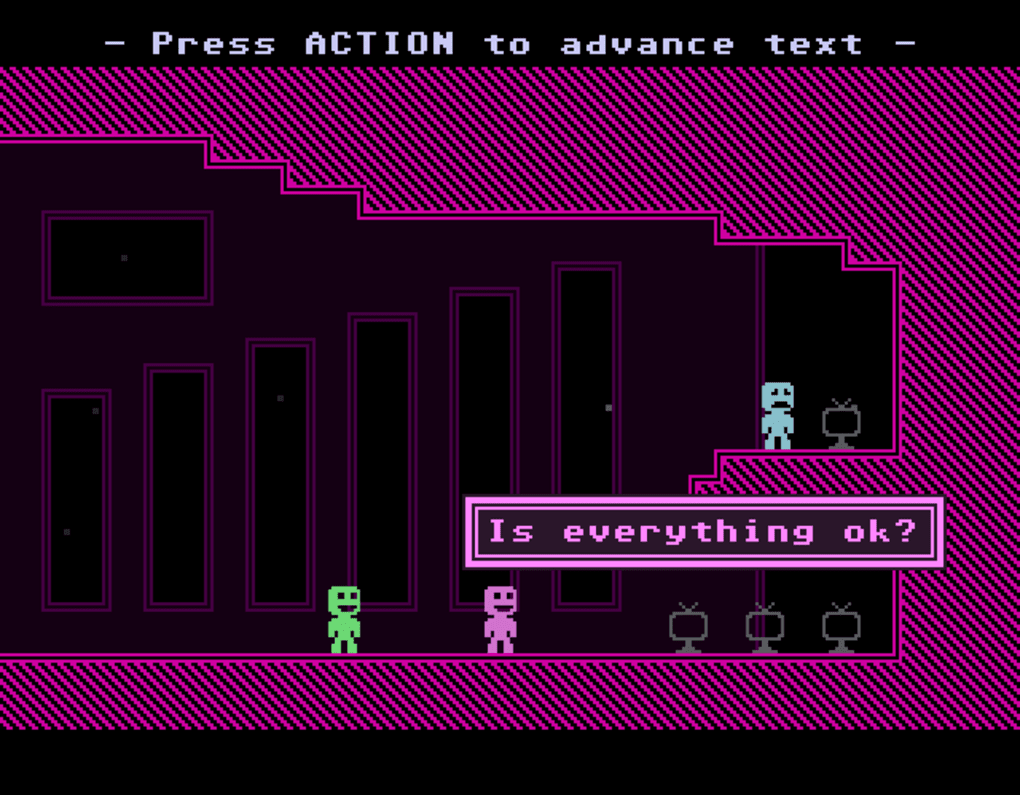
The narrative of VVVVVV, while minimalist, provides a charming and urgent backdrop to the action. Players assume the role of Captain Viridian, the intrepid leader of an exploratory space crew aboard the D.S.S. Souleye. Their mission of surveying Dimension V takes an unexpected and disastrous turn when a sudden “dimensional interference” event occurs. The crew, consisting of Viridian and five other “V”-named companions (Violet, Veridian, Vitellary, Vermillion, and Victoria), is scattered across a strange and hostile dimension, each member teleported to a different, perilous sector.
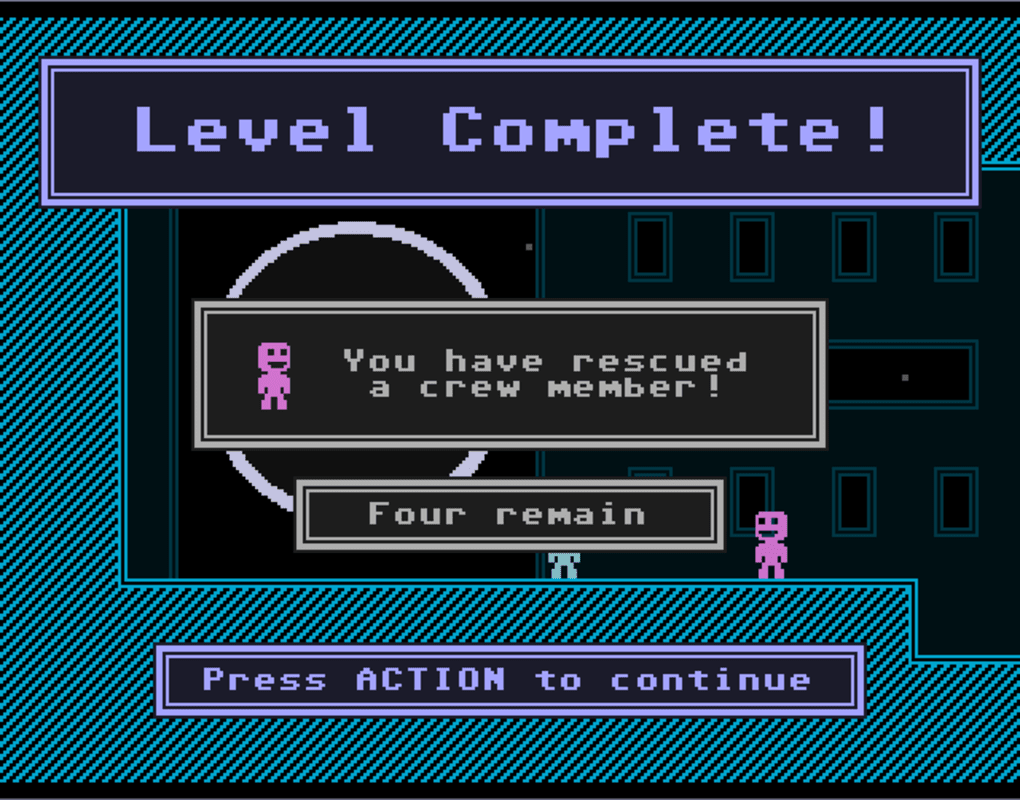
Viridian’s primary objective is clear: navigate this alien environment, locate and rescue each lost crew member, and ultimately find a way to escape Dimension V. This simple quest imbues the otherwise abstract puzzle-platforming with a sense of purpose and a subtle emotional pull. The player isn’t just traversing levels; they’re undertaking a heroic journey, piece by piece reuniting a fragmented team. The crewmates are often found in seemingly impossible-to-reach locations, guarded by complex environmental puzzles, which further reinforces the feeling of accomplishment with each rescue. This narrative framing, though light, adds a crucial layer of motivation and cohesion to the challenging gameplay, transforming a series of difficult rooms into a compelling adventure. The fate of the D.S.S. Souleye and its brave crew rests entirely on Captain Viridian’s unique ability to manipulate gravity itself.
The Gravity of Innovation: VVVVVV’s Core Mechanic
What truly distinguishes VVVVVV from its contemporaries and predecessors is its daring reimagining of fundamental platforming movement. In a genre traditionally defined by the jump button, VVVVVV audaciously discards it. Instead, by pressing the ‘V’ key – or another designated action button – Captain Viridian doesn’t leap; he reverses gravity. This isn’t merely a gimmick; it’s the very fabric of the game’s design, a single, elegantly implemented mechanic that is explored to an “almost cruel extent,” as the original description aptly puts it.
A World Without Jumping: Redefining Platformer Movement
Imagine a world where the primary means of vertical traversal is not to propel oneself upwards, but to flip the entire environment’s gravitational pull. This is the paradigm shift that VVVVVV introduces. Viridian is perpetually falling, either downwards towards the floor or upwards towards the ceiling. The player’s task is to judiciously switch between these two states to navigate the treacherous levels. This seemingly simple action unlocks a universe of complex movement possibilities. Platforms become ceilings, and ceilings become platforms. Spikes that once threatened from below now loom from above, requiring precise timing and spatial awareness to avoid.
This core mechanic forces players to completely unlearn ingrained platforming habits. Instead of planning jumps, they must plan gravitational shifts, anticipating trajectories and calculating the exact moment to flip. It transforms the act of moving into a continuous puzzle, where every step and every flip is a deliberate decision. The simplicity of the controls – just left, right, and ‘V’ – belies the profound depth they offer, creating a highly accessible yet infinitely challenging gameplay loop.
Puzzles of Perspective: Mastering Gravitational Shifts
Much like Valve’s groundbreaking Portal redefined puzzle-solving through its titular portal gun, VVVVVV uses gravity reversal as the singular key to its myriad of challenges. Every room, every corridor, every treacherous spike pit is meticulously designed around this mechanic. Players aren’t just reacting to obstacles; they’re constantly analyzing the environment, predicting how a gravitational flip will alter their path, and visualizing the optimal sequence of actions.
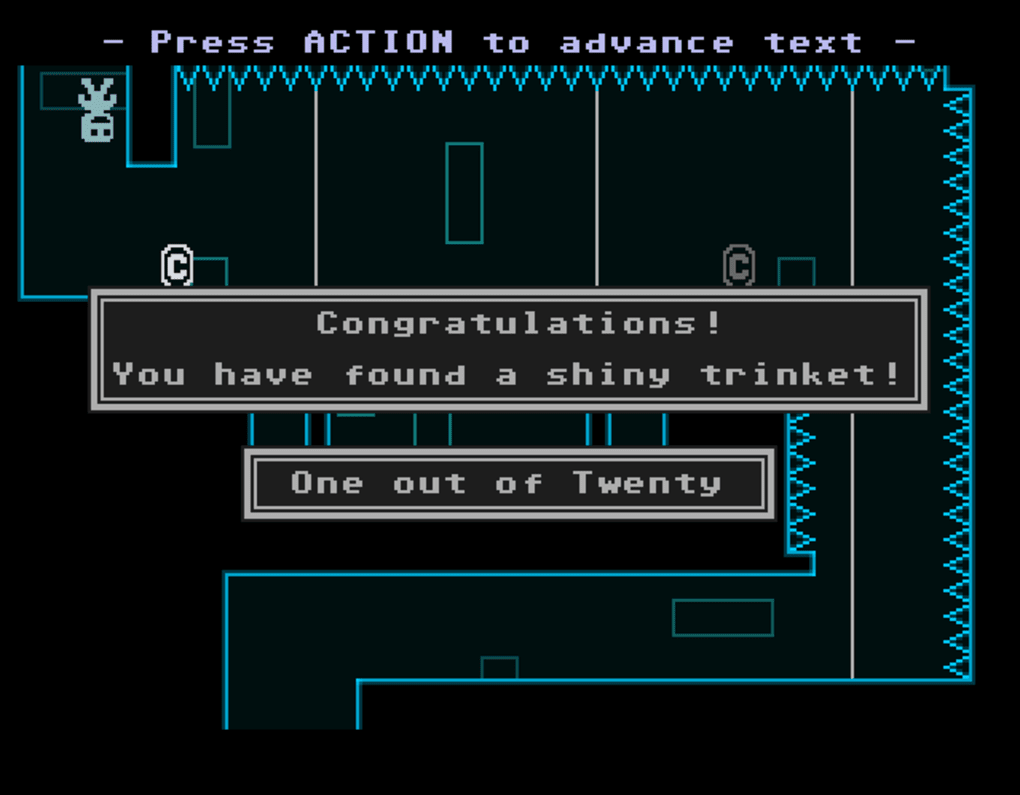
The game quickly progresses from simple traversals to intricate sequences demanding perfect timing and spatial reasoning. One might need to fall upwards through a narrow gap, flip mid-air to avoid a moving obstacle, and then flip again to land safely on a small platform – all within a matter of seconds. These puzzles are not just about reaching an exit; they often involve intricate pathways to collect “Trinkets” (the game’s collectibles) or to access new areas.
The genius lies in how VVVVVV continuously finds new ways to integrate its core mechanic into its level design. Moving platforms, conveyor belts, crushing blocks, and enemies all interact with the gravity flips in unique ways, demanding an evolving strategy from the player. The game constantly introduces new environmental elements that force players to re-evaluate their understanding of how gravity works in Viridian’s world, ensuring that the puzzle-solving remains fresh and engaging throughout the entire adventure. This mastery of a single mechanic is what elevates VVVVVV beyond a simple retro homage and firmly establishes it as a brilliant piece of innovative game design.
The Art of Structured Difficulty: Challenge and Triumph
VVVVVV is, without a doubt, a hard game. Its difficulty is frequently cited, and for good reason. The game masterfully blends precision platforming with rapid-fire puzzle-solving, often requiring pixel-perfect movements and split-second decisions. Some rooms are “almost malicious in their design,” pushing players to their absolute limits. Yet, despite its high challenge quotient, VVVVVV remains incredibly engaging and, crucially, fair. This delicate balance between relentless difficulty and constant player encouragement is a hallmark of its exceptional design.
Navigating the Gauntlet: High Stakes, Low Frustration
One of the most brilliant decisions in VVVVVV’s design, and a key factor in mitigating potential frustration, is its approach to player lives and checkpoints. While “death is common” – players will often perish hundreds, if not thousands, of times on their journey – “lives are unlimited.” This simple philosophy frees players from the anxiety of “game over” screens and the need to restart large sections of the game. It encourages experimentation and persistent attempts without the punitive consequences often found in older, more unforgiving platformers.
Furthermore, “there are checkpoints in most rooms.” This aggressive checkpointing system means that even after a particularly brutal death, players are immediately resurrected at the entrance of the current room, ready to try again. This rapid iteration cycle is vital. It allows players to quickly re-engage with the challenge, learn from their mistakes, and incrementally improve their execution. The short, distinct challenges presented by each room, combined with instant respawns, create a compelling feedback loop: fail, learn, adjust, repeat. This minimizes downtime and keeps the player immersed in the challenge, rather than pulling them out of the experience with long loading screens or distant respawn points. The stakes feel high because death is constant, but the cost of failure is low, allowing for a more enjoyable and less infuriating learning process.
The Sweet Taste of Victory: Overcoming Malicious Design
The difficulty in VVVVVV is not arbitrary; it’s a carefully crafted element of the experience. When the game throws a gauntlet of spikes, moving platforms, and tight timing windows at Captain Viridian, it’s testing the player’s understanding and mastery of the gravity-flipping mechanic. And precisely because the challenge is so intense, “it’s really rewarding to complete them.” The sense of accomplishment after finally conquering a room that seemed impossible moments earlier is immense. It’s a true test of skill, patience, and spatial awareness.
The developer’s understanding of this dynamic is encapsulated in the statement, “the game is always fair - when you fail it’s your fault!” This speaks volumes about the meticulous level design. There are no cheap hits, no unfair enemy placements, and no random elements that contribute to failure. Every death is a direct consequence of a miscalculation, a mistimed flip, or a lapse in concentration. This transparency in design empowers the player: they know that success is attainable through practice and precision, rather than luck. This unwavering fairness fosters a determined mindset, pushing players to refine their skills rather than blame the game. The ultimate triumph in VVVVVV isn’t just about finishing the game; it’s about mastering its unique language of gravity and emerging victorious over its brilliantly conceived, often “malicious,” challenges.
Retro Charm and Auditory Bliss: VVVVVV’s Aesthetic
Beyond its groundbreaking mechanics and challenging gameplay, VVVVVV captivates with an aesthetic that is both nostalgic and strikingly effective. The game’s visual and auditory design choices are not merely stylistic flourishes; they are integral to the overall experience, enhancing the gameplay, setting the mood, and cementing its place as a standout indie title.
The “cool look” of VVVVVV is a deliberate throwback to the 8-bit era. Its pixel art style is instantly recognizable, employing a limited but vibrant color palette that pops on the screen. Characters and environments are rendered with a charming blockiness, yet everything is clear and functional. Captain Viridian, with his distinctive triangular head, is iconic, and the simple, angular designs of the levels make the intricate pathways easy to read, which is crucial for a game demanding such precise movement. This minimalist approach proves that compelling visuals don’t always require millions of polygons; sometimes, a strong artistic vision and cohesive execution are far more powerful. The retro aesthetic serves a dual purpose: it evokes a sense of nostalgia for older gamers, while simultaneously proving to a modern audience that engaging experiences can be crafted with fundamental graphical elements, focusing attention on gameplay rather than graphical fidelity.
Complementing this retro visual feast is an “absolutely great soundtrack by Souleye.” Magnus Pålsson, under the alias Souleye, composed the game’s iconic “chiptune” music, a collection of bleepy, energetic tracks that are as catchy as they are motivating. This soundtrack isn’t just background noise; it’s an active participant in the game. Each track perfectly captures the frantic pace of the action, the tension of a particularly difficult room, or the triumphant feeling of overcoming a challenge. The music’s pulsating rhythms and memorable melodies are so infectious that they “will keep you tapping no matter how hard it gets!” This auditory backdrop creates an immersive atmosphere, providing a constant source of energy and an emotional underscore to Viridian’s perilous journey. The chiptune style is a perfect fit for the pixel art, creating a cohesive audiovisual package that is distinct and unforgettable. The combination of simple, evocative visuals and an electrifying soundtrack ensures that VVVVVV leaves a lasting impression, proving that sometimes, less is indeed more when it comes to crafting a truly memorable game world.
A Legacy of Innovation and Community Contribution
Since its initial release, VVVVVV has not only stood the test of time but has also continued to evolve, solidifying its place as a beloved indie classic. Its innovative design, unforgiving yet fair difficulty, and iconic aesthetic have left an indelible mark on the gaming landscape, inspiring both players and developers alike. The enduring appeal of VVVVVV is a testament to the power of a singular, well-executed idea.
Community-Driven Content: Extending the Adventure
One of the most significant updates to VVVVVV that enhanced its longevity and community engagement was the introduction of a level editor and additional player-created content. The original description highlights an updated release featuring “ten new levels created by other developers, including the legendary creator of Minecraft.” This inclusion of levels from notable figures in the indie development scene, such as Markus “Notch” Persson, lent significant credibility and excitement to the game’s expanded offerings. These levels, often adhering to the core design philosophy of VVVVVV while introducing new twists, provided fresh challenges for seasoned players and extended the game’s replayability far beyond its initial campaign.
More importantly, the integration of a full-fledged “level creator” tool empowered the player base to become content creators themselves. This move democratized the game’s design, allowing anyone to craft and share their own devious challenges and innovative puzzles using the same tools and mechanics as the original developer. The level editor fostered a vibrant and creative community around VVVVVV, leading to an endless stream of user-generated content, from casual fun stages to truly punishing “kaizo” levels. This constant influx of new material ensures that the game remains fresh and challenging, inviting players back time and again to test their skills against new obstacles and creative designs. It transformed VVVVVV from a finite experience into an ever-expanding universe of gravity-flipping adventures.
VVVVVV’s Enduring Impact on Indie Gaming
VVVVVV’s critical acclaim upon its release established it as an “early contender for game of 2010!” and cemented its status as a seminal title in the burgeoning independent game scene. Its success demonstrated that indie developers could compete with larger studios by focusing on innovative gameplay, strong artistic direction, and a clear, focused vision. It proved that a game didn’t need photorealistic graphics or a massive budget to resonate with players; a brilliant core mechanic and impeccable design could be far more impactful.
Terry Cavanagh’s creation became a benchmark for minimalist design executed to perfection. It influenced a generation of indie developers to experiment with core mechanics, to embrace challenging difficulty, and to recognize the power of evocative retro aesthetics. Its legacy can be seen in countless precision platformers and puzzle games that followed, many of which draw inspiration from VVVVVV’s elegant simplicity and profound depth. The game’s lasting appeal, evident in its continued availability across numerous platforms (from Windows to Nintendo Switch and PlayStation 4), underscores its universal and timeless quality. VVVVVV is more than just a game; it’s a testament to creative freedom and a powerful example of how a single, well-realized idea can capture the hearts and minds of players worldwide. Its “tour de force of innovative platforming” continues to be a standard-bearer for intelligent game design.
In conclusion, VVVVVV remains a shining example of expert game design. By removing the conventional jump and replacing it with an ingenious gravity-flipping mechanic, Terry Cavanagh crafted a platformer that feels both nostalgic and utterly unique. Its minimalist story, demanding yet fair challenges, iconic chiptune soundtrack, and vibrant pixel art coalesce into an unforgettable experience. Whether you’re a veteran gamer seeking a true test of skill or a newcomer eager to discover the brilliance of indie innovation, VVVVVV offers an adventure that is as frustratingly difficult as it is immensely rewarding. It stands tall not just among retro-inspired games, but as a masterpiece of the genre, continuing to delight and challenge players over a decade after its initial release.
File Information
- License: “Trial version”
- Latest update: “May 29, 2024”
- Platform: “Windows”
- OS: “Windows 2000”
- Language: “English”
- Downloads: “30.1K”


