
Warez, a peer-to-peer (P2P) file-sharing network, once held a prominent, albeit controversial, position in the online landscape. Its history is intertwined with the evolution of P2P technology and the ongoing struggle between copyright holders and users seeking free access to digital content. This in-depth analysis explores the functionality, history, security concerns, and ultimately, the legacy of Warez in the world of file sharing.
The Rise and Fall of Warez: A Technological Overview
Warez’s origins trace back to the early days of widespread internet access, a time when the limitations of dial-up connections and the high cost of digital content fueled the demand for alternative methods of acquiring software, music, and movies. Initially, it closely resembled other popular P2P networks like Ares Galaxy, utilizing a decentralized architecture to distribute files among users. This meant that no central server controlled the network, making it resilient to takedown attempts. The network’s popularity soared, fueled by its ease of use and the vast library of shared files available. Warez distinguished itself by implementing features such as an advanced queuing system and multi-sourced swarmed downloads, promising faster download speeds compared to its contemporaries like Kazaa and Gnutella.
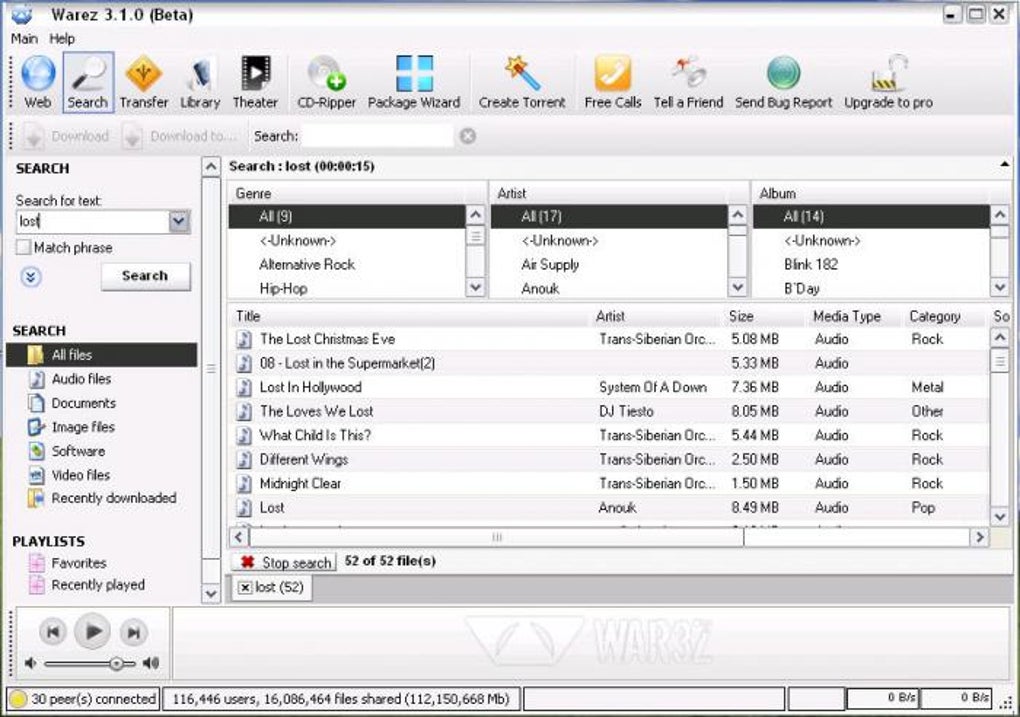
The core functionality of Warez revolved around searching for and downloading files from other users’ computers. This involved searching a vast index of shared content, connecting to peers offering the desired files, and downloading them in pieces from multiple sources simultaneously. The network used a distributed hash table (DHT) to locate files efficiently, allowing users to search across numerous nodes simultaneously and find the most effective download sources. This is in direct contrast to centralized file sharing networks.

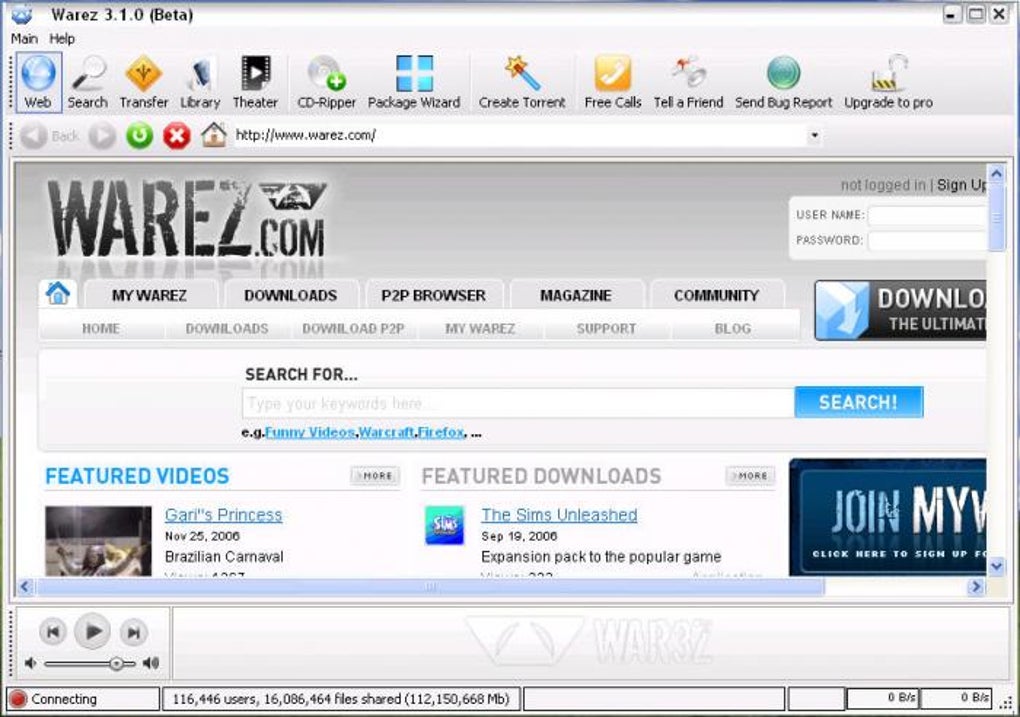
Warez also integrated several additional features designed to enhance the user experience. A built-in media player allowed users to preview and play downloaded files directly within the application. The inclusion of a CD ripper facilitated the creation of audio CDs from downloaded music files. Importantly, Warez also boasted a significant web integration, allowing users to expand their searches beyond the network’s immediate confines, using the integrated web browser feature. The integration of torrent functionality further broadened the scope of accessible files, drawing on the increasingly prevalent torrent networks. A chat feature provided a forum for communication among users, a critical feature of many P2P platforms of the time.
Despite these features aimed at improving user convenience, questions persisted about Warez’s security and overall impact. Reports of bundled adware and spyware circulated, raising concerns about the potential for malicious software infiltration. While the developers repeatedly denied including such elements, individual user experiences were inconsistent, leading to a divided user base. While some praised the user-friendly interface and purportedly fast download speeds, others reported experiencing significant security problems.
Security Concerns and the Shadow of Piracy
The very nature of Warez’s functionality – facilitating the free exchange of copyrighted material – raised significant legal and ethical concerns. The distribution of copyrighted software, music, and movies without permission is illegal in most jurisdictions. This inherent illegality cast a long shadow over the network, attracting both users seeking free content and those distributing infringing material.
The lack of a central authority made it challenging to monitor and regulate the content shared on the Warez network. The decentralized nature that made the network resilient to takedown attempts also made it difficult to control the distribution of illegal materials. Consequently, Warez became a focal point for copyright infringement litigation and regulatory action.
Moreover, security issues proved problematic. Even if Warez itself was free from malicious software, the files downloaded through the network were often untested and potentially hazardous. The risk of downloading malware alongside desired files posed a serious threat to users’ systems. This added another layer of concern on top of the legal liabilities associated with using the network. The absence of stringent security measures further compounded the potential threat.
Warez and the Evolution of File-Sharing Technology
Warez’s evolution mirrored the broader progression of P2P technology. The early versions relied heavily on the Ares network architecture, evolving to incorporate elements from later, more sophisticated technologies, such as BitTorrent, adding features like “Virtual BitTorrent” downloading. However, despite technological advancements, the underlying issue of copyright infringement remained central.
The transition towards more sophisticated, distributed systems and technologies like BitTorrent highlighted that the problem wasn’t solely about the platform itself, but the nature of how digital content was managed and shared. The growth of legal digital content stores and streaming services eventually provided legitimate alternatives to the illegal downloading offered by platforms like Warez. This shift reflected a larger evolution in the relationship between users, content creators, and the technology facilitating content distribution. Warez’s existence helped accelerate the pressure to create these legal alternatives, paving the way for the streaming services we are familiar with today.
The Legacy of Warez: A Case Study in the Digital Age
Warez serves as a significant case study in the history of digital content sharing, demonstrating the complex interplay between technological innovation, copyright law, and user behavior. The network’s popularity and longevity were directly related to the limitations of early digital distribution systems and the high cost of legitimate content. However, its reliance on the sharing of copyrighted material inevitably led to its decline in relevance as more user-friendly and legal alternatives emerged.
The story of Warez underscores the challenges posed by the rapid expansion of digital content and the difficulties involved in balancing the interests of copyright holders and users’ desire for free or inexpensive access to information. The platform’s legacy serves as a reminder of the ongoing tension between innovation, legal frameworks, and ethical considerations in the digital sphere. While Warez itself may be largely defunct, its influence on the development of file-sharing technology and the broader discussion surrounding copyright and online content access remains significant. The platform’s story provides valuable insights for understanding how technology shapes user behaviour and the complex dynamics of the digital marketplace. Its rise and fall highlight the tension between access to information and the need to respect intellectual property rights. Ultimately, Warez, while controversial, stands as a pivotal moment in the unfolding history of digital content distribution.
File Information
- License: “Trial version”
- Version: “3.2.0”
- Latest update: “August 20, 2018”
- Platform: “Windows”
- OS: “Windows 2000”
- Language: “English”
- Downloads: “108.3K”
- Size: “349.43 KB”


