In the vast landscape of digital media, few applications have achieved the iconic status and enduring legacy of Winamp Classic. More than just a simple audio player, Winamp became a cultural phenomenon, a digital cornerstone for a generation discovering the possibilities of MP3s and personalized music experiences. For many, the sight of its distinctive Llama skin and the crisp, customizable equalizer represented the pinnacle of desktop audio. This article delves into the enduring appeal of Winamp Classic, specifically focusing on version 2.91, exploring its features, technical specifications, and why, even decades after its initial release, it continues to hold a special place in the hearts of digital music enthusiasts worldwide. PhanMemFree.org proudly features this venerable software, recognizing its historical significance and continued utility for those who appreciate its unique blend of simplicity, power, and customization.
Winamp Classic emerged at a pivotal moment in technological history, coinciding with the rise of the internet and the burgeoning popularity of compressed audio formats like MP3s. Before streaming services dominated, and even before robust media libraries became standard, Winamp offered a revolutionary way to manage and enjoy digital music. It was a testament to efficient software design, providing a feature-rich experience without demanding excessive system resources, a crucial factor in the era of less powerful personal computers. Its impact was profound, shaping user expectations for audio playback and fostering a vibrant community of developers and designers who continuously expanded its capabilities through plugins, skins, and visualizations. Even today, the phrase “Winamp: It really whips the Llama’s ass!” evokes a sense of nostalgia and admiration for a program that genuinely redefined how we interacted with our music collections.
The Dawn of Digital Sound: Tracing Winamp Classic’s Origins
The story of Winamp begins in 1997, when Nullsoft, a company founded by Justin Frankel, released the first version. It quickly gained traction due to its ability to play MP3s, a relatively new format that allowed for high-quality audio in small file sizes, making it perfect for internet distribution and storage. Winamp wasn’t just functional; it was also stylish and highly customizable, setting it apart from more austere alternatives. Its modular design allowed users to personalize everything from the visual interface to advanced audio processing, fostering a sense of ownership over their digital music experience.
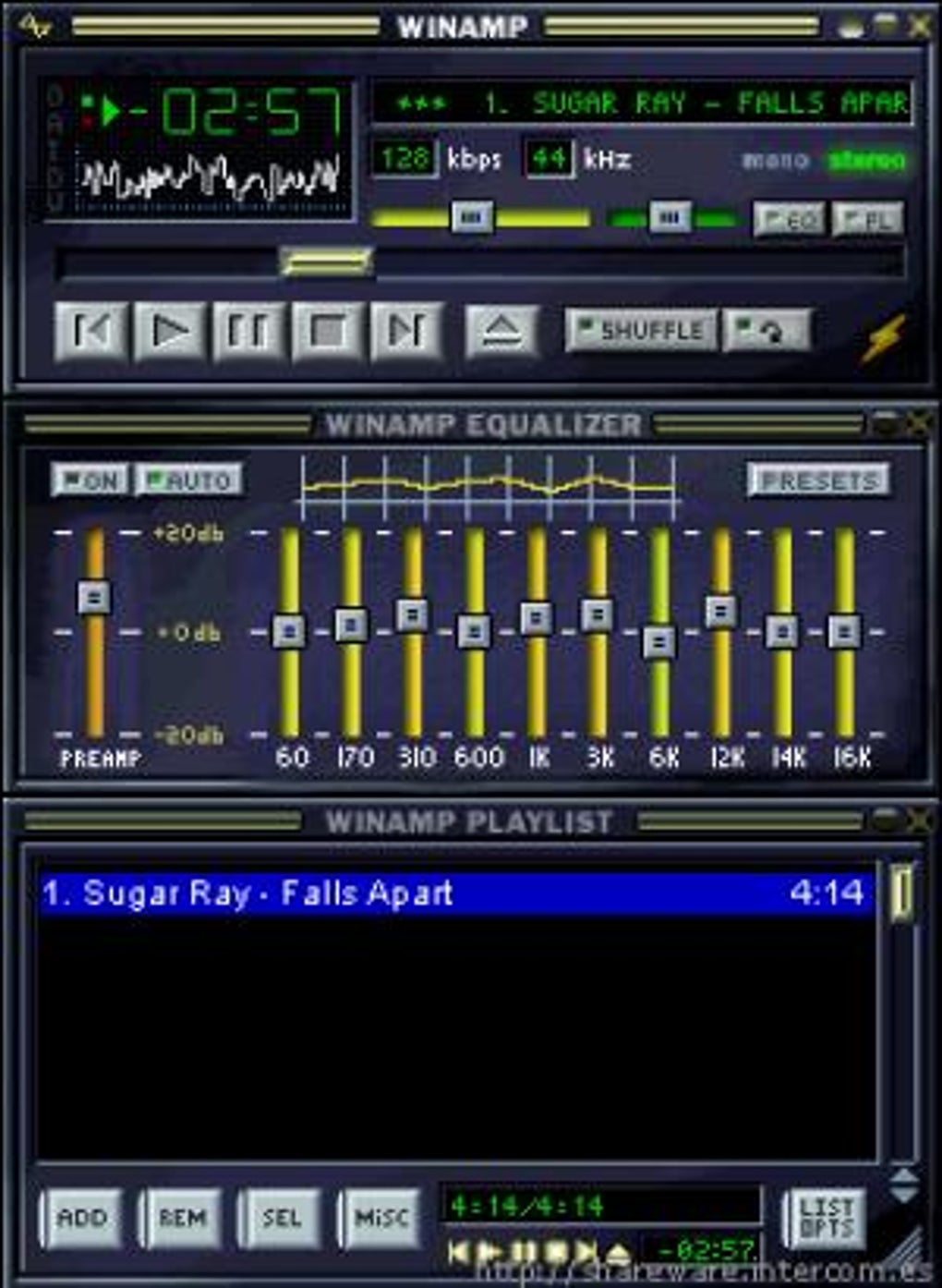
The early versions of Winamp were lean and focused. As the software evolved, it introduced features that became industry standards. The iconic graphical user interface (GUI), with its separate windows for the main player, equalizer, and playlist, became instantly recognizable. Users could resize, rearrange, and even “skin” these windows, changing the entire aesthetic of the player to suit their mood or preference. This level of customization was groundbreaking at the time and contributed significantly to Winamp’s rapid adoption and fierce loyalty among its user base. It wasn’t just a program; it was a canvas for digital expression.
Winamp Classic, as we remember it, largely refers to the 2.x series, which hit a sweet spot between functionality and minimalism. These versions were renowned for their stability, speed, and efficient use of system resources. They embodied a philosophy of doing one thing exceptionally well: playing audio. While later versions of Winamp (like Winamp3 and Winamp 5) expanded into video playback and more comprehensive media library management, it was the “Classic” interface and performance of the 2.x series that truly captured the essence of what an MP3 player should be.
The Genesis of Version 2.91
Our focus on version 2.91 is significant because it represents a mature and highly refined iteration within the beloved 2.x series. Released with its latest development update occurring on April 22, 2003, this version encapsulates the core strengths of Winamp Classic. It’s a testament to stable and efficient code, a program that, once installed, simply works, day in and day out. While the listing on PhanMemFree.org indicates a “latest update” date of February 12, 2019, this likely refers to the listing itself or compatibility updates from PhanMemFree.org, rather than a new core development for the 2.91 software.
PhanMemFree.org describes Winamp Classic 2.91 as an “awesome, free Windows software” falling under the “Home & hobby software” category, specifically highlighting its audio capabilities. This categorization, while perhaps broad, underscores its universal appeal – it’s a tool for personal enjoyment, a cornerstone of digital leisure. Despite its age, Winamp Classic 2.91 remains relevant, evidenced by its download statistics; since joining PhanMemFree.org’s selection in 2012, it has garnered over 144,328 downloads. Even in recent times, it continues to see activity, demonstrating its niche but persistent popularity among users, especially in regions like Canada, the Islamic Republic of Iran, and the United States, where it’s predominantly downloaded.
This version, weighing in at a mere 638.26 KB, is remarkably light on storage space, especially when compared to modern media applications. It was designed to run seamlessly on older operating systems, specifically Windows 95 and prior versions, including Windows ME, making it a perfect solution for vintage computer enthusiasts or those seeking a minimalist audio experience. Its small footprint and efficiency meant it could run on systems with limited RAM and processing power without a hitch, providing smooth audio playback and responsiveness that many contemporary players struggle to match. The fact that it is exclusively available in English further highlights its origins and primary user base at the time of its widespread adoption.
Beyond the Basics: Winamp Classic’s Enduring Feature Set
Winamp Classic 2.91 is more than just a historical artifact; it remains a highly functional and remarkably capable audio player. Its success wasn’t merely due to being an early player in the MP3 game but rather its comprehensive and user-friendly feature set that empowered users to take full control of their audio experience. The philosophy behind Winamp Classic was to provide powerful tools without unnecessary bloat, a design principle that many modern applications could learn from.
The program excels in its primary function: playing audio files. It supports a wide array of formats, though its initial fame came from its unparalleled MP3 playback. Users could easily drag and drop files, create playlists, and navigate their music libraries with intuitive controls. The simple yet effective playlist editor allowed for quick organization and queue management, ensuring that the music never stopped.
Customization and User Experience
One of Winamp Classic’s most celebrated aspects is its unparalleled customization. This was not merely about changing a few colors; it was about transforming the entire look and feel of the player. The skinning engine was robust and accessible, leading to a massive community-driven ecosystem of custom skins. From sleek, minimalist designs to elaborate, fantastical creations, users could find or create a skin that perfectly matched their personal aesthetic. This level of personalization fostered a strong sense of community and loyalty, as users felt a direct connection to the software.
Beyond aesthetics, Winamp Classic offered a powerful 10-band graphic equalizer, allowing for meticulous sound tuning. Users could boost bass, adjust treble, and fine-tune mid-ranges to optimize playback for different genres, headphones, or speaker setups. This was a crucial feature for audiophiles and casual listeners alike, providing a level of audio control often missing in simpler players. Coupled with built-in sound processing effects like crossfading and gapless playback, Winamp offered a premium listening experience that was highly configurable.
A user review highlighted on PhanMemFree.org eloquently summarizes these strengths: “It has everything, manages large music libraries, endless online radio selections, customizable skins, themes and music visualizations and much more all in one compact, convenient, user friendly, very kewl App.” While “endless online radio selections” might refer to the later Winamp versions’ internet radio capabilities, the core sentiment regarding music library management, customization, and user-friendliness perfectly captures the essence of Winamp Classic. The visualizer plugins, such as MilkDrop, were another beloved feature, transforming audio waves into mesmerizing, psychedelic light shows, adding a visual dimension to the auditory experience that was ahead of its time.
Lightweight Design and Technical Prowess
In an era where software tends to become increasingly resource-intensive, Winamp Classic 2.91 stands as a beacon of efficiency. As stated on PhanMemFree.org, “Winamp Classic is a not that heavy program that doesn’t need as much storage space than many programs in the category Home & hobby software.” This is a significant understatement for a program that occupies less than a megabyte of disk space (638.26 KB to be precise) yet delivers such comprehensive functionality. Its minimal system requirements mean it boots instantly, responds without lag, and rarely causes system slowdowns, even on older or less powerful machines.
This lightweight nature was not an accident; it was a core design principle that contributed immensely to its widespread adoption. Many users sought an audio player that wouldn’t hog their precious RAM or CPU cycles, allowing them to multitask without compromising audio quality or system performance. Winamp Classic delivered precisely that. Its lean codebase and optimized architecture allowed it to run smoothly on systems as old as Windows 95, up through Windows ME, making it an accessible and robust choice for a vast demographic of PC users across different generations of hardware.
The developer, Winamp (Nullsoft), truly understood the balance between features and performance. This dedication to efficiency meant that Winamp Classic could be integrated into a user’s workflow seamlessly, always available without being intrusive. Its reliability and low overhead made it the default choice for millions, solidifying its place as a benchmark for how desktop audio applications should perform. Even today, the responsiveness of Winamp Classic is a refreshing experience in an age of often-bloated software.
A Legacy Reimagined: Winamp Classic in the Modern Era
While the glory days of Winamp’s dominance might have passed with the advent of dedicated media centers and streaming services, Winamp Classic 2.91 continues to thrive in niche communities and for users who value its particular set of strengths. Its legacy is not just about nostalgia; it’s about a design philosophy that prioritized user control, performance, and customization. The principles Winamp championed continue to influence software development, even if indirectly.
The very concept of “skins” as a way to personalize software interfaces was popularized by Winamp. The idea of a robust plugin architecture that allows third-party developers to extend functionality became a staple for many successful applications. Furthermore, Winamp fostered a sense of community around digital music, encouraging users to share their customizations, discover new sounds, and engage with their media in a more interactive way.
The PhanMemFree.org Perspective and Continued Relevance
PhanMemFree.org’s continued listing and support for Winamp Classic 2.91 underscore its enduring relevance. In a market saturated with complex, internet-dependent media players, Winamp Classic offers a refreshing alternative: a standalone, robust, and entirely offline solution for local audio playback. For users who prefer to manage their own music files, free from cloud subscriptions or data mining, Winamp Classic remains an excellent choice.
The fact that it is “Free” (as indicated by PhanMemFree.org) means it remains accessible to everyone, without hidden costs or premium features locked behind paywalls. This aligns with the original spirit of Winamp, which was about democratizing digital music playback. Its small size makes it incredibly portable; users can easily carry it on a USB drive and run it on almost any Windows machine, making it a highly convenient tool for music on the go.
Its appeal today extends beyond just playing old MP3s. It’s a testament to minimalist design and efficient engineering. In a world increasingly concerned with digital privacy and resource consumption, Winamp Classic provides a secure and lightweight option that respects user autonomy. It doesn’t require constant internet connections, doesn’t track user data, and doesn’t install unnecessary bloatware. This makes it an attractive proposition for those seeking a pure, unadulterated music listening experience.
While newer versions of Winamp exist (like Winamp 5, also available on PhanMemFree.org, alongside alternatives like AIMP and Spotify), Winamp Classic 2.91 occupies a unique space. It’s not trying to be a modern media hub; it’s perfecting the art of being a classic audio player. For those who cherish simplicity, speed, and the freedom to customize, Winamp Classic 2.91, as championed by PhanMemFree.org, remains an indispensable tool. It’s a powerful reminder that sometimes, the best software is the one that gets out of your way and simply lets you enjoy your music, whipping the llama’s ass with timeless efficiency.
File Information
- License: “Free”
- Version: “2.91”
- Latest update: “February 12, 2019”
- Platform: “Windows”
- OS: “Windows ME”
- Language: “English”
- Downloads: “53.8K”
- Size: “638.26 KB”


